Ancien Régime
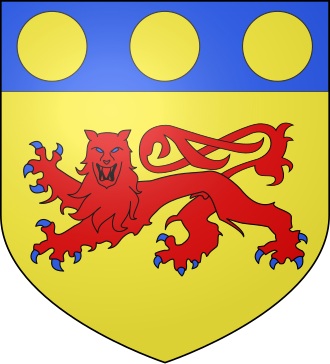
Jean Pierre Le Claire, Très Noble Seigneur
⚭Jacqueline Antoinette Catherine Van der Vyvere
1718, 1793
A principal figure in the documented LeClaire line. Father of the senior French officer Théodore François Joseph Leclaire and husband of an heiress of the Van der Vyvere.
The Name Through History
A single continuous line, recorded under many forms as it passed through Lorraine, France, the Rhineland and Britain.
De Parroye / de Haute-Pierre
before 1310
Seigneurial houses of Lorraine from which the maternal ancestry descends
Moingins dis li clers
c. 1310 – 1400
Lorrain vernacular byname, 1355 charter
Le Clerc · Leclerc
15th – 17th c.
French-Lorraine seigneurial line
Le Claire
late 17th – 18th c.
Transitional French spelling of the direct line
Leclaire
18th – 19th c.
Napoleonic-era French form
Le Clair · Leclair
19th c.
Rhineland branch, German civil registers
Licklär
1880 – 1970
Germanised orthography, 20th-century Rhineland
LeClaire
21st c.
Restored British form, House of Greenland-LeClaire
Family connection
Parents. Son of François 'Pierre' Le Claire and Marie-Anne Du Moine, known locally as “Nanon”, of the Lorraine / Alsace frontier.
Spouse. Jacqueline Antoinette Catherine Van der Vyvere (1726, 1789).
Jacqueline Antoinette Catherine Van der Vyvere (1726–1789), of the established Van der Vyvere family. Research indicates her marriage involved a dowry of approximately 90,000 livres, a sum extraordinary by the standards of the period, associated with major merchants, financiers, office-holders or noble families. By relative status and economic power, the order of magnitude approaches several million pounds in modern equivalence, potentially in the region of £20 million.
Children. Father of at least two sons whose lines diverge here: Louis Jean Baptiste Leclaire (1753–1825), through whom the modern bloodline descends, and Général de division Théodore François Joseph Leclaire (1752–1811), Chevalier of Saint-Louis and Commander of the Legion of Honour, whose career carried the family name into the highest ranks of the Revolution and the Empire.
Position in the Direct Line
Generation 11 of 19 in the continuous bloodline shown on the home-page pedigree, from Mengin Le Clerc of Lorraine (c. 1355) to Brandon Noble LeClaire.
Generation 11·Le Claire
Jean Pierre Le Claire, Très Noble Seigneur
1718
Historical context
Jean Pierre Le Claire occupies a pivotal position within the family history. Through his marriage to Jacqueline Van der Vyvere, the family combined long-standing Lorraine ancestry with significant Flemish wealth and influence. His children would establish both the distinguished military branch represented by Théodore François Joseph Leclaire and the branch from which the modern LeClaire family descends.
Jean Pierre Le Claire (1718–1793) is a principal figure in the documented LeClaire line. His marriage to Jacqueline Antoinette Marie Catherine Van der Vyvere of the Flemish Van der Vyvere family marks the first major movement of the principal line into the Lower Rhine. Lived during the reigns of Louis XV and Louis XVI, he represents the generation immediately preceding the French Revolutionary era, and died in 1793, in the year of the Terror, having lived through the apogee, decline and final collapse of the Ancien Régime in which his fathers had served.
Jean Pierre Leclaire's generation represents the consolidation of the family's position within the educated and influential classes of Lorraine and Alsace.
That his son entered the officer corps suggests the family possessed sufficient wealth, education and social standing to secure opportunities unavailable to ordinary citizens, a position reinforced by the Van der Vyvere alliance and its accompanying dowry.
Significance & legacy
Through Jean Pierre the family maintained the status and resources necessary to continue its upward trajectory into the late eighteenth century. The Van der Vyvere connection stands as one of the strongest indicators of wealth within the documented family history.
From his household emerged the senior officer Théodore François Joseph Leclaire, Chevalier of the Royal and Military Order of Saint-Louis, the most decorated member of the documented French line, and his brother Louis Jean Baptiste Leclaire, through whom the bloodline of the present House continues.
By the late eighteenth century, the children of Jean Pierre Le Claire and Jacqueline Van der Vyvere included a future Général de Division of France, multiple descendants of substantial standing in Alsace and Lorraine, and the branch from which the modern LeClaire family descends. Few generations in the family's history proved as influential as theirs.
Known records & evidence
Lineage explorer
Jean Pierre Le Claire, Très Noble Seigneur in the line
Trace the generations from this ancestor to the present day, follow how land, titles and arms descended, or open the wider network of marriages and allied houses.
9 generations of the documented bloodline
- 1
A principal figure in the documented LeClaire line. Father of the senior French officer Théodore François Joseph Leclaire and husband of an heiress of the Van der Vyvere.
- 2'Louis Benjamin' Jean Baptiste Alexis Leclaire24 June 1754, 29 July 1825
Younger son of Jean Pierre Le Claire and Jacqueline Van der Vyvere; younger brother of Général Théodore François Joseph Leclaire. Through Louis the direct bloodline of the modern House descends into the Rhineland.
- 3Johann Baptiste Le Clair1796, ?
A generation showing the family name in the Le Clair form, reflecting linguistic and administrative variation.
- 4Gottfried Leclair1842, 1915
A nineteenth-century representative of the Leclair spelling within the family's period of German-speaking assimilation.
- 5Julius Leclair1880, 1961
Son of Gottfried Leclair and Maria E. Maßmann; husband of Elisabeth Fitze and father of Bernhardine Licklär, through whom the bloodline continues into the modern German-speaking generation.
- 6Bernhardine Licklär1920, 1978
Daughter of Julius Leclair and Elisabeth Fitze; her surname records the fully Germanised form of the family name. Mother of Monika Ute Licklär by Jan Jagt; the two were not married.
- 7Monika Ute Licklär1944, ?
Continuation of the Germanised branch of the LeClaire line; mother of the modern restoration.
- 8Andrea Michaela Tai-Noble1966, ?
A daughter of the House of LeClaire; the continuation of the bloodline through the Licklär branch, and mother of Brandon Noble LeClaire. Her documented descent runs from Jean Pierre Le Claire and Jacqueline Van der Vyvere through their younger son Louis Jean Baptiste Leclaire, brother of Général Théodore François Joseph Leclaire, and the successive Le Clair, Leclair and Licklär generations of the Rhineland.
- 9Brandon Noble LeClaire1995, ?
Head of the House of LeClaire
Modern representative and present head of the House of LeClaire, one of the historic noble and moneyed houses of the Duchy of Lorraine, and, by his 22 May 2027 marriage to Abigail Jane Greenland, founder of the House of Greenland-LeClaire. He has formally restored the ancestral surname LeClaire to continue an eight-hundred-year documented lineage that includes the Sieurs de Pulligny, Auditors of the Chamber of Accounts of Nancy, advancers of capital to the Dukes of Lorraine, and his fifth-great-granduncle Général de Division Théodore François Joseph Leclaire, Commander of the Legion of Honour.
Related entities
Other documented people, family branches, places and armorial records connected to this entry in the archive.
Related people
Related families
Related heraldry
Elsewhere in the archive
Citations & sources
Each numbered reference below supports a specific statement on this page. The evidence label records how firmly that reference attests the point.
- Primary SourceFull reference: Parish and notarial records of Lorraine, Alsace and the Lower Rhine.
- Published GenealogyFull reference: Marriage and dowry instruments of the Van der Vyvere family.
House of LeClaire
Published GenealogyFull reference: LeClaire Family Historical Archive, House of LeClaire — https://leclaire.co.uk/historical-archiveFrench National Archives, sovereign and noble records of the Ancien Régime and after.
Published Scholarly ResearchFull reference: Archives Nationales (France), French National Archives, sovereign and noble records of the Ancien Régime and after. — https://www.archives-nationales.culture.gouv.fr/Genealogy platform; use only entries that themselves cite primary records.
Published Scholarly ResearchFull reference: Geneanet, Genealogy platform; use only entries that themselves cite primary records. — https://www.geneanet.org/Open-licensed historical images, maps and document scans.
Published Scholarly ResearchFull reference: Wikimedia Commons, Open-licensed historical images, maps and document scans. — https://commons.wikimedia.org/Charles d'Hozier's Armorial général de France (1696), digitised by the BnF.
Published Scholarly ResearchFull reference: BnF, Armorial général de France (d'Hozier), Charles d'Hozier's Armorial général de France (1696), digitised by the BnF. — https://gallica.bnf.fr/ark:/12148/btv1b8470253qOpen-licensed reproductions of French armorial bearings.
Published Scholarly ResearchFull reference: Wikimedia Commons, Heraldry of France, Open-licensed reproductions of French armorial bearings. — https://commons.wikimedia.org/wiki/Category:Heraldry_of_France
Canonical URL: https://leclaire.co.uk/people/jean-pierre-leclaire