The House of
House of LeClaire — Nine Centuries of Family History: the documented pedigree of the LeClaire, Le Clerc, Leclerc, Le Claire, Leclair and Licklär lines of Lorraine, to Brandon Noble LeClaire
Nine Centuries of Heritage, Service & Legacy.
View the pedigreeAlso recorded as Leclerc, Le Clerc, Leclaire, Le Claire, Leclair and Licklär.
The Pedigree
From the Earliest Recorded Forebears to the Present Generation
One continuous documented descent, generation by generation, from the ministerial nobility of Lorraine to the present generation. Each name opens to reveal siblings, spouses, children, cadet branches, biography and source notes.
An ancestral line rooted in medieval Lotharingia and Lorraine, passing through Verdun and Metz to Parroye, Haute-Pierre, Toullon and Gircourt, before joining the Le Clerc family in the fourteenth century and continuing to the present generation.
Ancestry explorerLotharingia and Lorraine descentThe full pedigree
TimelineCenturies and places of the direct lineA century-by-century summary of the recorded descent from Lorraine to the present line.ExpandCollapse
Centuries and places of the direct line
- 10th century
- 12th century
- 13th century
- 14th century
- 14th century · Lorraine, France
- 15th century · Pulligny, Lorraine
- 16th century · Pulligny / Nancy, Lorraine
- 16th century · Nancy, Lorraine
- 17th century · Lorraine
- 17th century · Lorraine / Alsace frontier
- 18th century
- 18th century · Termonde (Dendermonde), Oost-Vlaanderen, Belgium
- 18th century
- 19th century
- 20th century
OriginsFrom Lotharingia and Lorraine to the present lineThe recorded descent above Mengin Le Clerc, running back through Gircourt, Haute-Pierre, Toullon, Parroye, Metz, Verdun and the Ardennes. Every generation is a person page with its own sources; the deeper ancestry is set out in the full pedigree.ExpandCollapse
37 recorded generations, each one an individual person page carrying dates, spouse, both parents, sources and evidence status.
- 1Wigeric of LotharingiaDied before 922
Count in the Bidgau and count palatine of Lotharingia; founder of the house of Ardennes and father of Gozlin.
Published Genealogy
- 2Gozlin of Bidgauc. 910 to c. 943
Count in the Bidgau and the Ardennes, c. 910 to c. 943; father of Godfrey the Captive.
Published Genealogy
- 3Godfrey "the Captive" of Verdunc. 935 to c. 1005
Count of Verdun, c. 935 to c. 1005; husband of Mathilde of Saxony and father of Gerberge of Verdun.
Contemporary Record
- 4Gerberge of VerdunDates not established
Daughter of Godfrey the Captive, Count of Verdun, and Mathilde of Saxony; wife of Folmar IV of Metz. Through her the descent continues into the house of Ardennes and the Carolingians.
Published Genealogy
- 5Gottfried of MetzDates not established
Count of Metz and the Saargau; son of Folmar IV and Gerberge of Verdun, and the ancestor from whom the Parroye seigneurs descend in the working pedigree.
Published Genealogy
- 6Simon de ParroyeDates not established
Son of Gottfried I, Count of Metz and the Saargau, in the working reconstruction; the link between the comital house of Metz and the seigneurs of Parroye.
Under Active Research
- 7Sicard (Simon II) de ParroyeDates not established
Styled in some reconstructions "de Metz"; father of Odoin I de Froville in the working pedigree.
Under Active Research
- 8Odoin I de FrovilleDates not established
Father of Odon II de Froville in the working Froville and Parroye pedigree.
Published Genealogy
- 9Odon II de FrovilleDates not established
Father of Simon de Froville in the working Froville and Parroye pedigree.
Published Genealogy
- 10Simon de FrovilleDates not established
Husband of Mathilde de Parroy and father of Simon I de Parroye.
Published Genealogy
- 11Simon I de ParroyeDates not established
Head of the house of Parroye and father of Albert de Parroye, from whom the Haute-Pierre cadet branch and the direct route to Brandon Noble LeClaire descend.
Published Genealogy
- 12Albert de ParroyeDates not established
Son of Simon I de Parroye and early representative of the Haute-Pierre cadet branch of the house of Parroye. The first of the three successive Alberts.
Published Genealogy
- 13Albert de Haute-Pierrec. 1172 to c. 1222
Chevalier of the Haute-Pierre branch, c. 1172 to c. 1222; the second of the three successive Alberts and father of Albert de Haute-Pierre, seigneur de Haute-Pierre (died 1231).
Published Genealogy
- 14Albert de Haute-PierreDied 20 October 1231
Seigneur de Haute-Pierre, died 20 October 1231; father of Liébaud de Haute-Pierre (died 1281). The third of three successive Alberts, who are kept distinct in this archive.
Published Genealogy
- 15Liébaud de Haute-PierreDied 1281
Chevalier and seigneur de Froville, died 1281; member of the Haute-Pierre branch of the house of Parroye and father of Marguerite and Hadwide de Haute-Pierre.
Published Genealogy
- 16Marguerite de Haute-PierreDates not established
Daughter of Liébaud de Haute-Pierre and his wife Isabelle; wife of Jean II de Toullon. She is the branch by which the Haute-Pierre ancestry passes into the house of Toullon.
Published Genealogy
- 17Thiébaud (Liébaud) de Toullonlate 13th century to c. 1343
Son of Jean II de Toullon and Marguerite de Haute-Pierre; father of Catherine de Haute-Pierre, through whom the Toullon and Haute-Pierre ancestry passes into the Gircourt and Le Clerc line.
Published Genealogy
- 18Catherine de Haute-PierreBorn late 13th / early 14th century
Daughter of Thiébaud (Liébaud) de Toullon, wife of Jacques de Gircourt and mother of Catherine de Gircourt. She represents the transmission of the Haute-Pierre and Toullon inheritance into the Gircourt branch.
Published Genealogy
- 19Catherine de Gircourtc. 1320 to after 1355
Daughter of Jacques de Gircourt and Catherine de Haute-Pierre, wife of Mengin Le Clerc and mother of Colin Le Clerc. She is the gateway through which the direct pedigree passes from the Le Clerc family into the Gircourt, Haute-Pierre, Toullon and Parroye ancestry of Lorraine.
Published Genealogy
- 20Colin Le ClercDates not established
Échevin, a civic figure within the early Lorraine line, reflecting the family's early standing in municipal and regional life.
LeClaire Family Archive
- 21Jehan Leclerc de Pullignyc. 1410 to c. 1465
Ennobled by letters patent on 3 January 1464. Through him the House enters the recognised noble and seigneurial order of Lorraine.
LeClaire Family Archive
- 22Mengin II Le ClercDates not established
Continuation of the Pulligny line, an important bridge between the early civic family and the later noble branches.
LeClaire Family Archive
- 23Claude Leclerc de Pullignyc. 1485 to 1562
A major patriarch of the House of Le Clerc. Merchant of silk and wool cloth, valet de chambre to Duke Antoine, Conseiller and Auditeur at the Chamber of Accounts under Charles III, and seigneur of multiple lordships in Lorraine.
LeClaire Family Archive
- 24Claude II Leclerc de Pulligny1532 to 1598
Argentier to the Duke of Lorraine and Treasurer to the Count of Vaudémont's company, the height of the Le Clerc de Pulligny family's political and financial influence, whose conversion to Protestantism brought the confiscation of the family's nobility and lands, and one of the defining crises in the history of the House.
LeClaire Family Archive
- 25Alexandre Le Clerc de Pulligny1585 to after 1659
Born in Nancy, son of Claude II Le Clerc de Pulligny and Claudon Mengin de Pulligny. Served Charlotte Catherine de La Trémoille, Princess of Taranto and wife of Henri de Bourbon-Condé. Later a Knight of Saint Mark and, together with his brother Jean, restored to hereditary nobility on 28 May 1623. Alexandre represents the most likely continuation of the direct ancestral line following Claude II.
LeClaire Family Archive
- 26Nicolas Le Clerc1624 to 1660
Son of Alexandre Le Clerc de Pulligny and father of Alexandre II Le Clerc; the generation through which the direct ancestral line is carried across the mid-seventeenth century in Lorraine.
LeClaire Family Archive
- 27Alexandre II Le Clerc1652 to 1695
Minor Lord of Lorraine and key transitional figure linking the historic Le Clerc de Pulligny family to the subsequent Le Claire branches from which the modern House descends.
LeClaire Family Archive
- 28François 'Pierre' Le ClaireBorn 1684
First generation to bear the Le Claire form of the family name. Son of Alexandre II Le Clerc and direct ancestor of the eighteenth-century Le Claire line.
LeClaire Family Archive
- 29Jean Pierre Le Claire, Très Noble Seigneur1718 to 1793
A principal figure in the documented LeClaire line. Father of the senior French officer Théodore François Joseph Leclaire and husband of an heiress of the Van der Vyvere.
LeClaire Family Archive
- 30'Louis Benjamin' Jean Baptiste Alexis Leclaire24 June 1754 to 29 July 1825
Younger son of Jean Pierre Le Claire and Jacqueline Van der Vyvere; younger brother of Général Théodore François Joseph Leclaire. Through Louis the direct bloodline of the modern House descends into the Rhineland.
LeClaire Family Archive
- 31Johann Baptiste Le ClairBorn 1796
A generation showing the family name in the Le Clair form, reflecting linguistic and administrative variation.
LeClaire Family Archive
- 32Gottfried Leclair1842 to 1915
A nineteenth-century representative of the Leclair spelling within the family's period of German-speaking assimilation.
LeClaire Family Archive
- 33Julius Leclair1880 to 1961
Son of Gottfried Leclair and Maria E. Maßmann; husband of Elisabeth Fitze and father of Bernhardine Licklär, through whom the bloodline continues into the modern German-speaking generation.
LeClaire Family Archive
- 34Bernhardine Licklär1920 to 1978
Daughter of Julius Leclair and Elisabeth Fitze; her surname records the fully Germanised form of the family name. Mother of Monika Ute Licklär by Jan Jagt; the two were not married.
LeClaire Family Archive
- 35Monika Ute LicklärBorn 1944
Continuation of the Germanised branch of the LeClaire line; mother of the modern restoration.
LeClaire Family Archive
- 36Andrea Michaela Tai-NobleBorn 1966
A daughter of the House of LeClaire; the continuation of the bloodline through the Licklär branch, and mother of Brandon Noble LeClaire. Her documented descent runs from Jean Pierre Le Claire and Jacqueline Van der Vyvere through their younger son Louis Jean Baptiste Leclaire, brother of Général Théodore François Joseph Leclaire, and the successive Le Clair, Leclair and Licklär generations of the Rhineland.
LeClaire Family Archive
- 37Brandon Noble LeClaireBorn 1995
Modern representative and present head of the House of LeClaire, one of the historic noble and moneyed houses of the Duchy of Lorraine, and, by his 22 May 2027 marriage to Abigail Jane Greenland, founder of the House of Greenland-LeClaire. He has formally restored the ancestral surname LeClaire to continue an eight-hundred-year documented lineage that includes the Sieurs de Pulligny, Auditors of the Chamber of Accounts of Nancy, advancers of capital to the Dukes of Lorraine, and his fifth-great-granduncle Général de Division Théodore François Joseph Leclaire, Commander of the Legion of Honour.
LeClaire Family Archive
- Generation 1 of 37
Wigeric of Lotharingia⚭Cunigunda
?, before 922
Open full biography →Count in the Bidgau · Count palatine of Lotharingia
Count in the Bidgau and count palatine of Lotharingia; founder of the house of Ardennes and father of Gozlin.
Earliest record - Generation 2 of 37
Gozlin of Bidgau⚭Oda of Metz
c. 910, c. 943
Open full biography →Count in the Bidgau · Count in the Ardennes
Count in the Bidgau and the Ardennes, c. 910 to c. 943; father of Godfrey the Captive.
- Generation 3 of 37
Godfrey "the Captive" of Verdun⚭Mathilde of Saxony
c. 935, c. 1005
Open full biography →Count of Verdun · Margrave of Antwerp
Count of Verdun, c. 935 to c. 1005; husband of Mathilde of Saxony and father of Gerberge of Verdun.
- Generation 4 of 37
Gerberge of Verdun⚭Folmar of Metz
Open full biography →Daughter of Godfrey the Captive, Count of Verdun, and Mathilde of Saxony; wife of Folmar IV of Metz. Through her the descent continues into the house of Ardennes and the Carolingians.
- Generation 5 of 37
Gottfried of Metz⚭Judith of Luxembourg
Open full biography →Count of Metz and the Saargau; son of Folmar IV and Gerberge of Verdun, and the ancestor from whom the Parroye seigneurs descend in the working pedigree.
- Generation 6 of 37
Simon de Parroye
Open full biography →Son of Gottfried I, Count of Metz and the Saargau, in the working reconstruction; the link between the comital house of Metz and the seigneurs of Parroye.
- Generation 7 of 37
Sicard (Simon II) de Parroye
Open full biography →Styled in some reconstructions "de Metz"; father of Odoin I de Froville in the working pedigree.
- Generation 8 of 37
Odoin I de Froville
- Generation 9 of 37
Odon II de Froville⚭Adélaïde de Neuviller
- Generation 10 of 37
Mathilde de Parroy⚭Simon de Froville
Open full biography →Wife of Simon de Froville; through her the Parroy name passes into the Froville line.
- Generation 11 of 37
Simon I de Parroye⚭Mathilde
Open full biography →Head of the house of Parroye and father of Albert de Parroye, from whom the Haute-Pierre cadet branch and the direct route to Brandon Noble LeClaire descend.
- Generation 12 of 37
Albert de Parroye
Open full biography →Son of Simon I de Parroye and early representative of the Haute-Pierre cadet branch of the house of Parroye. The first of the three successive Alberts.
- Generation 13 of 37
Albert de Haute-Pierre⚔Chevalier
c. 1172, c. 1222
Open full biography →Chevalier
Chevalier of the Haute-Pierre branch, c. 1172 to c. 1222; the second of the three successive Alberts and father of Albert de Haute-Pierre, seigneur de Haute-Pierre (died 1231).
- Generation 14 of 37
Albert de Haute-Pierre◆Seigneur
?, 20 October 1231
Open full biography →Seigneur de Haute-Pierre
Seigneur de Haute-Pierre, died 20 October 1231; father of Liébaud de Haute-Pierre (died 1281). The third of three successive Alberts, who are kept distinct in this archive.
- Generation 15 of 37
Liébaud de Haute-Pierre⚔Chevalier◆Seigneur⚭Isabelle
?, 1281
Open full biography →Chevalier · Seigneur de Froville
Chevalier and seigneur de Froville, died 1281; member of the Haute-Pierre branch of the house of Parroye and father of Marguerite and Hadwide de Haute-Pierre.
- Generation 16 of 37
Marguerite de Haute-Pierre⚭Jean II de Toullon
Open full biography →Daughter of Liébaud de Haute-Pierre and his wife Isabelle; wife of Jean II de Toullon. She is the branch by which the Haute-Pierre ancestry passes into the house of Toullon.
- Generation 17 of 37
Thiébaud (Liébaud) de Toullon
late 13th century, c. 1343
Open full biography →Son of Jean II de Toullon and Marguerite de Haute-Pierre; father of Catherine de Haute-Pierre, through whom the Toullon and Haute-Pierre ancestry passes into the Gircourt and Le Clerc line.
- Generation 18 of 37
Catherine de Haute-Pierre⚭Jacques de Gircourt
late 13th / early 14th century
Open full biography →Daughter of Thiébaud (Liébaud) de Toullon, wife of Jacques de Gircourt and mother of Catherine de Gircourt. She represents the transmission of the Haute-Pierre and Toullon inheritance into the Gircourt branch.
- Generation 19 of 37
Mengin Le Clerc⚭Catherine de Gircourt
c. 1310, after 1355
Open full biography →First documented Le Clerc of the line
- Noble marriage
The earliest medieval Le Clerc generation of the canonical direct sequence; husband of Catherine de Gircourt and father of Colin Le Clerc, recorded in Lorraine in 1355.
Born, Lorraine, France
Historical Profile
Mengin appears during the fourteenth century, a period shaped by plague, the Hundred Years' War, the schism of the Western Church and persistent political instability across the Duchy of Lorraine.
He should be described as the first known documentary figure in the Le Clerc line, appearing not as a peasant but as a man connected to property and lesser noble society. Through his wife Catherine de Gircourt he was linked to an established landholding network of the region.
Lorraine occupied a strategic position between the Kingdom of France and the Holy Roman Empire. Families such as the Gircourts, Pullignys and Le Clercs formed part of the local gentry that governed estates, administered justice and supported their feudal overlords.
Parents
His own parents are not presently established. The ancestry above him in the direct pedigree runs through his wife Catherine de Gircourt, and so through Jacques de Gircourt and Catherine de Haute-Pierre into the Toullon, Haute-Pierre and Parroye houses.
Spouse
His wife was Catherine de Gircourt, also recorded as Catherine de Girecourt, born about 1320, daughter of Jacques de Gircourt and of Catherine de Haute-Pierre, daughter in turn of Thiébaud (Liébaud) de Toullon. Through her the pedigree continues through Marguerite de Haute-Pierre, Liébaud de Haute-Pierre (died 1281) and the three successive Alberts to Simon I de Parroye. Research history: an earlier version of this archive identified Mengin Le Clerc with Johann III von Mengen and consequently recorded his wife as Catherine de Bauffremont. That identification has been withdrawn. Catherine de Bauffremont is a different woman, wife of a different man, and is not an ancestor of this line.
Children
From this union descend the entire documented Le Clerc, Leclerc and LeClaire pedigree of subsequent generations, beginning with their son Colin Le Clerc.
Family Significance
Mengin Le Clerc is the earliest ancestor to bear the Le Clerc name. His marriage to Catherine de Gircourt connects the Le Clerc family to the Gircourt, Haute-Pierre, Toullon and Parroye ancestry shown above him. With him the documented record of the Le Clerc surname, and therefore of the modern LeClaire, begins.
The territorial designation "de Pulligny", borne by his descendants for generations, indicates that the family's standing did not originate solely through marriage but was already established within the social structure of Lorraine.
Legacy
Every subsequent generation of the House, the Sieurs de Pulligny, the Leclerc du Vivier, the Le Claire, Leclaire, Le Clair, Licklär and the modern LeClaire and Greenland-LeClaire, descends from Mengin Le Clerc and Catherine de Gircourt.
Sources & Evidence
- Documented record, 1355 act of sale to Jean de Nomeny concerning inherited portions of the Girecourt estate at Folz beneath the castle of Faucompierre.
- Genealogical source tradition, registers of medieval Lorraine and notarial records of the Pulligny and Gircourt families.
Siblings
Philippin de Gircourt⚭Clémence de Pulligny
A Gircourt écuyer of the same seigneurial circle, from whose estate Mengin held inherited portions in 1355. A medieval squire and landed gentleman whose marriage to Clémence de Pulligny created an alliance between two established Lorraine families, prefiguring the later seigneurial association between the Le Clercs and the Pulligny line.
Clémence de Pulligny⚭Philippin de Gircourt
Wife of Philippin de Gircourt and one of the earliest documented appearances of the Pulligny name within the family's wider ancestral network.
- Generation 20 of 37
Colin Le Clerc⚭Marguerite Petitgout
Open full biography →Échevin
- Civic office
Échevin, a civic figure within the early Lorraine line, reflecting the family's early standing in municipal and regional life.
Born, Lorraine, France
Historical Profile
Colin Le Clerc served as échevin, a magistracy of standing within the municipal order of medieval Lorraine, charged with the administration of civic justice and the supervision of public affairs.
Parents
Son of Mengin Le Clerc and Catherine de Gircourt, daughter of Jacques de Gircourt and Catherine de Haute-Pierre.
Spouse
Married Marguerite Petitgout (born c. 1390–1410, likely in or around Mirecourt), recorded in earlier genealogies only as 'N. Petitgout' before later reconstructions restored her Christian name. She was the daughter of Richart dit le Favart Petitgout, wealthy merchant, civic magistrate and Mayor of Mirecourt, and his wife Hauvix, who together founded a charitable hospital in the town. Through her, the Petitgout inheritance passed into the Le Clerc line and was formally recognised in 1461, when her grandson Nicole Le Clerc de Pulligney was declared 'plus proche hoir' (closest heir) of Richart Petitgout. Many historians consider this inheritance a significant factor in the emergence of the Le Clerc de Pulligney family as an influential noble house of Lorraine.
Children
Father of Jacques Le Clerc and Jehan Leclerc de Pulligney, through whom the line passes into the ennobled branch.
Family Significance
His office anchors the family within the governing class of its commune in the generation following Mengin, confirming continuity of standing across the early fifteenth century.
Legacy
Through Colin the early Le Clerc line was carried forward into the generation that would, with Jehan Leclerc de Pulligny, enter the recognised noble and seigneurial world of Lorraine.
Sources & Evidence
- Genealogical source tradition, early Lorraine civic and notarial registers.
Siblings
Jacques Le Clerc
Brother of Colin; a younger son of the founding generation.
Jehan Leclerc de Pulligny
Brother of Colin; from whom the seigneurial line of Pulligny took its name.
- Generation 21 of 37
Jehan Leclerc de Pulligny◆Sieur⚭N. de Pulligny
c. 1410, c. 1465
Open full biography →Sieur de Pulligny
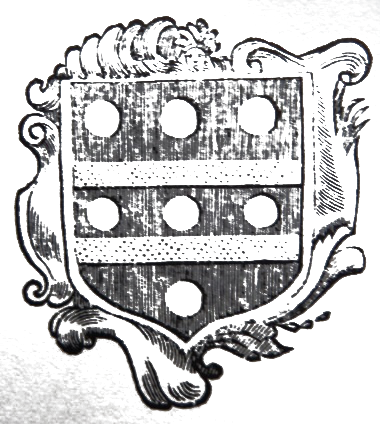
Arms granted upon ennoblement, 1464 Gules, two fesses or intertwined with seven bezants argent, placed 3, 3 and 1. Crest: a dexter hand vested in gold holding a human head with long hair and beard of the same in its natural form, and a long ermine banner hanging from the said dexter hand.
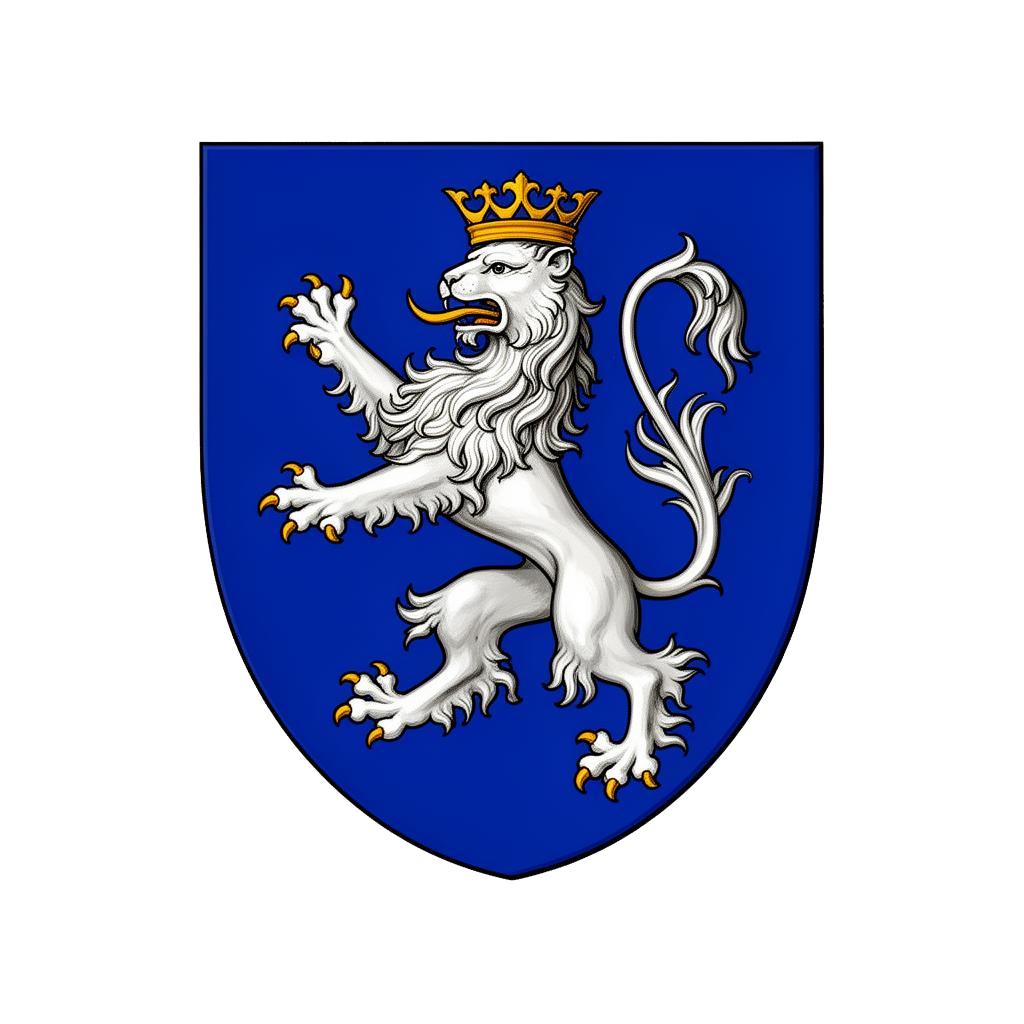
Arms of de Pulligny, ancient chivalry of Lorraine, brought in by marriage Azure, a lion argent armed, langued and crowned or.
- Noble marriage
- Estate & seigneury
- Heraldic significance
- Civic office
Ennobled by letters patent on 3 January 1464. Through him the House enters the recognised noble and seigneurial order of Lorraine.
Born, Pulligny, Lorraine
Historical Profile
Jehan Leclerc de Pulligney represents the family's formal passage from influential civic society into recognised nobility. A bourgeois of Nancy by 1429, he operated within the legal and administrative world of the Duchy of Lorraine.
He appears in litigation as procurator or legal representative in a dispute involving Guiot Poignant, the marshal of Aspremont, Henri d'Ogéviller, lord of Domrémy and Greux, and the inhabitants of those villages, placing him in the politically charged landscape associated with Jeanne d'Arc.
His ennoblement by Jean II of Lorraine on 3 January 1464 marks one of the defining moments in the family's rise. The seigneurial designation of Pulligny, granted with the patent, would be borne by the principal line of the House for the next three centuries.
Parents
Son of Colin Le Clerc and Marguerite Petitgout (recorded in earlier genealogies as 'N. Petitgout'), daughter of Richart dit le Favart Petitgout, Mayor of Mirecourt, and his wife Hauvix; grandson of Mengin Le Clerc and Catherine de Gircourt.
Sources & Evidence
- Documented record, ennoblement act of 3 January 1464 by Jean II, Duke of Lorraine.
- Documented record, litigation concerning Domrémy, Greux and the marshal of Aspremont.
Children of the House
Nicole Le Clerc
Daughter of Jehan; a continuation of the house through the female line.
Mengin II Le Clerc
Son and principal heir, continuing the seigneurial line.
- Generation 22 of 37
Mengin II Le Clerc⚭Mengette
Open full biography →Continuation of the Pulligny line, an important bridge between the early civic family and the later noble branches.
Born, Pulligny, Lorraine
Historical Profile
Mengin II Le Clerc was one of the great architects of the family's ascent. By the late fifteenth and early sixteenth centuries, the Le Clercs were no longer merely a family of local standing, they were involved in civic government, trade and the financial administration of Nancy.
A 1498–1499 register records the second account of receipts and expenses made by the four governors or sworn officers of Nancy, including Mengin II Le Clerc. His position enabled his sons Claude and Thierry to receive renewed noble recognition under Duke Antoine of Lorraine in 1512.
In family terms, he represents the point at which wealth, office and noble ambition converged.
Parents
Son of Jehan Leclerc de Pulligney.
Spouse
Married Mengette, mother of Claude Leclerc de Pulligny and Thierry Le Clerc de Roville.
Sources & Evidence
- Documented record, 1498–1499 register of the four governors of Nancy.
- Documented record, 1512 letters patent of ennoblement of Claude and Thierry, sons of the late Mengin II.
Children of the House
Thierry Le Clerc de Roville
Founder of the Roville cadet branch.
Demange Le Clerc
Founder of the Demange cadet branch.
Claude Leclerc de Pulligny
Principal heir and patriarch of the main line.
The Roville Branch
A collateral branch of the House of Le Clerc, issued from Thierry Le Clerc de Roville.
Thierry Le Clerc de Roville
Founder of the Roville branch.
Pierre Le Clerc de Roville⚭Alix de Billy
Son of Thierry; continued the Roville line.
Marguerite Le Clerc⚭Nicolas de Gondrecourt
Daughter of Pierre; allied the branch to the Gondrecourt.
The Demange Branch
A collateral branch issued from Demange Le Clerc.
Demange Le Clerc
Founder of the Demange branch.
Jean Le Clerc⚭Anne Sagay
1500, 1602
Son of Demange; a long-lived figure of the branch.
Blessed Alix Le Clerc
1576, 1622
Daughter of Jean. Foundress of the Congregation of Notre Dame, pioneer of free education for girls of every social class, and beatified by Pope Pius XII in 1947. One of the most internationally influential members ever to bear the Le Clerc name.
- Generation 23 of 37
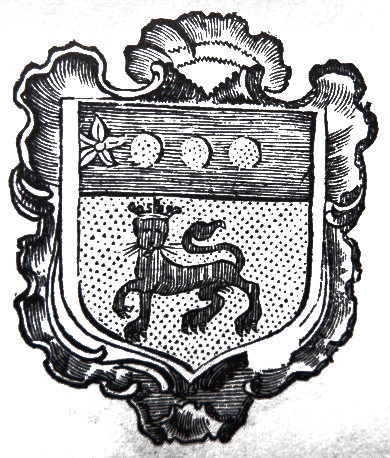
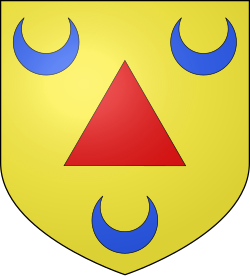
Claude Leclerc de Pulligny◆Seigneur⚭Catherine de Trèves de Xirocourt
c. 1485, 1562
Open full biography →Valet de Chambre to Duke Antoine of Lorraine · Seigneur of Pulligny, Ceintrey, Voinémont, Malaucourt-sur-Seille, Chamagne, Érize-Saint-Dizier and Saint-Dizier
Arms granted upon ennoblement, 1512 Or, a leopard gules armed, langued and crowned azure, on a chief of the same charged with three bezants or.
Arms of de Trèves of Xirocourt, brought in by Catherine de Trèves Or, a pile (triangle) gules between three crescents azure, two in chief and one in base.
- Estate & seigneury
- Civic office
- Noble marriage
- Heraldic significance
A major patriarch of the House of Le Clerc. Merchant of silk and wool cloth, valet de chambre to Duke Antoine, Conseiller and Auditeur at the Chamber of Accounts under Charles III, and seigneur of multiple lordships in Lorraine.
Born, Pulligny, Lorraine
Historical Profile
Claude's ennoblement in 1512 confirmed the standing achieved by his father Mengin II and placed the family within the recognised noble society of Lorraine. The arms recorded for the family at this point are: Or, a leopard gules, armed, langued and crowned azure, on a chief azure three bezants or.
His possession of the fief of Pulligny, his house in Nancy decorated with his arms, and his chapel at Saint-Epvre all point to a man of substantial means and public identity.
Parents
Son of Mengin II Le Clerc and Mengette his wife.
Spouse
Married in 1530 to noble Catherine de Trèves de Xirocourt, daughter of Pierre de Trèves (ennobled 1509) and Barbe de Véel; dame of Xirocourt, Erizé-Saint-Dizier and the two Marasses. Still living with Claude in 1557; widowed at 27 rue de La Boudière in 1572. Sister of Jean de Trèves (who travelled to Jerusalem in 1538), of Gilles de Trèves, canon and dean of Saint-Maxe, builder in 1555 of the Chapel of the Annunciation (the Chapel of the Princes), wealthy enough to lend large sums to Duke Antoine of Lorraine, and sister-in-law of Gaspard de Beurges, lord of Remicourt and Houdemont, Conseiller and Auditeur at the Chamber of Accounts (1551). Through this marriage Claude's property was important enough to richly endow four daughters and leave substantial inheritances to four sons.
Children
Issue: Claudon Le Clerc (m. 1546 Nicolas de Lescut de Saint-Germain, count palatine of the Lateran palace and imperial court by letters of Charles V, 20 May 1544); Barbe Le Clerc (m. 1554 Jean de Lescut de Saint-Germain, lord of Pixerécourt, lieutenant general of the bailliage of Nancy, Conseiller and Auditeur at the Chamber of Accounts from 5 May 1563); Jean Le Clerc (m. 1567 Élisabeth Champenois de Nogent); Marie Le Clerc (m. Nicolas Humbelot, ennobled by the Duke of Lorraine 23 February 1564, lord of Sergueux and Langres, bailli of Châtillon-sur-Seine); Pierre Leclerc du Vivier (before 1524, 1598, m. 1561 Anne Fériet de Varangéville); Claude II Leclerc de Pulligny (1532–1598); and Mengin III Le Clerc, Abbot of Saint-Thierry, valet de chambre ordinaire of the duke from 10 September 1556.
Family Significance
Claude is the great branching patriarch of the House of Le Clerc. Through him the family enters the seigneurial, court and financial elite of Lorraine simultaneously. His marriage to Catherine de Trèves de Xirocourt linked the Le Clercs to another recently ennobled but powerful Lorraine family with considerable wealth and ducal influence.
Legacy
His life represents one of the clearest moments when the family's civic, commercial and noble identities became fully joined. His descendants, through the principal line, the Vivier branch and the Pulligny continuation, carried the name into the seventeenth and eighteenth centuries.
Sources & Evidence
- Documented record, letters of ennoblement, 5 May 1512, Duke Antoine of Lorraine.
- Documented record, appointment to the Chamber of Accounts, 9 February 1553, Duke Charles III of Lorraine.
- Documented record, burial at the Basilica of Saint-Epvre, Nancy, 1562.
- Genealogical source tradition, Guy de Rambaud and associated Lorraine genealogical compilations.
Children of the House
Claudon Le Clerc⚭Nicolas de Lescut de Saint-Germain (m. 1546)
Count palatine of the Lateran palace and imperial court by letters of Charles V (20 May 1544); sent to the emperor in 1542 for negotiations connected to the Treaty of Nuremberg.
Barbe Le Clerc⚭Jean de Lescut de Saint-Germain (m. 1554)
Lord of Pixerécourt; lieutenant general of the bailliage of Nancy; Conseiller and Auditeur at the Chamber of Accounts from 5 May 1563. Descendants connected to the Rennel, Rutant and Bermand.
Jean Le Clerc⚭Élisabeth Champenois de Nogent (m. 1567)
Married into the Champenois de Nogent de Neuflotte, connected to the salines and financial administration of Lorraine.
Marie Le Clerc⚭Nicolas Humbelot
Husband ennobled by the Duke of Lorraine 23 February 1564 for military services; lord of Sergueux and Langres in Champagne, bailli of Châtillon-sur-Seine.
Pierre Leclerc du Vivier⚭Anne Fériet de Varangéville (m. 1561)
before 1524, 1598
Seigneur du Vivier-en-France; valet de chambre and Auditeur (1554); General of Finances (1557); Procureur Général des finances; Conseiller, Surintendant and General of Finances to Cardinal Charles de Lorraine (1585); Conseiller and Surintendant to Philippe-Emmanuel, Duke of Mercœur; banker to Duke Charles III; Conseiller to the King of France and Treasurer General of Brittany. Buried Saint-Nicolas-des-Champs, Paris.
Claude II Leclerc de Pulligny⚭Claudon Galland de Pulligny (1st); Claudon Mengin de Pulligny (2nd)
1532, 1598
Argentier of the Duke of Lorraine; Treasurer of the company of the Count of Vaudémont; valet de chambre of Charles III. Converted to Protestantism, lost his nobility and saw his property confiscated; became secretary to Charlotte Catherine de La Trémoille, Princess of Tarente. Returned to Pulligny, again seigneur in part of the fief, buried there 1598. Father of the painter Jean Le Clerc (Knight of Saint Mark) and of Alexandre Le Clerc (Knight of Saint Mark), whose nobility was restored in 1623.
Open full biography →Mengin III Le Clerc
Abbot of Saint-Thierry; valet de chambre ordinaire of the duke from 10 September 1556.
The Vivier Branch
Issued from Pierre Leclerc du Vivier, one of the most distinguished figures of the House, Treasurer General of Brittany and financial officer to the Dukes of Lorraine. Through his maternal descendants the Le Clerc blood passed into the family of Marie-Madeleine de Castille, wife of Nicolas Fouquet, Superintendent of Finances to Louis XIV.
Pierre Leclerc du Vivier⚭Anne Fériet de Varangéville
before 1524, 1598
Seigneur du Vivier-en-France; General of Finance; Treasurer General of Brittany.
Alix Le Clerc du Vivier
Daughter of Pierre.
Marguerite Le Clerc du Vivier
Daughter of Pierre.
Anne Le Clerc du Vivier
Daughter of Pierre.
Nicole Le Clerc du Vivier
Daughter of Pierre.
Chrestienne Le Clerc du Vivier
Daughter of Pierre; through her line descended the maternal grandmother of Marie-Madeleine de Castille.
Marie-Madeleine de Castille
c. 1633, 1716
Second wife of Nicolas Fouquet, Superintendent of Finances under Louis XIV. Descended through her maternal ancestry from the Le Clerc du Vivier branch.
The Pulligny Continuation
Claude II Leclerc de Pulligny, second son carrying the Pulligny seigneury; his sons Jean (the painter) and Alexandre Le Clerc restored the family's nobility in 1623, while a younger son, Laurent, carried the line forward through the craftsman branch.
Claude II Leclerc de Pulligny⚭Claudon Galland de Pulligny (1st); Claudon Mengin de Pulligny (2nd)
1532, 1598
Argentier of the Duke of Lorraine; creditor of the ducal house; Protestant convert who lost the family nobility and lands before returning to Pulligny.
Jean Le Clerc
1586, 1633
Painter to the Republic of Venice and the Dukes of Lorraine; Knight of the Order of Saint Mark; veteran of the Venetian wars against the Ottomans. Restored to hereditary nobility 1623.
Alexandre Le Clerc
1587, after 1659
Knight of Saint Mark, court musician, diplomat and valet de chambre of the Duke of Lorraine. Restored to hereditary nobility 1623.
Laurent Le Clerc de Pulligny
1595, 1691
Master goldsmith; apprenticed c.1605, working in Paris by 1610 and Lyon by 1630. Rebuilt the family's prosperity through craftsmanship after the Reformation confiscations; identified by Guy de Rambaud as the ancestor from whom many later artists and craftsmen of the House descended.
- Generation 24 of 37
Claude II Leclerc de Pulligny◆Seigneur⚭Claudon Galland de Pulligny (1st) · Claudon Mengin de Pulligny (2nd)
1532, 1598
Open full biography →Argentier of the Duke of Lorraine · Treasurer of the Company of the Count of Vaudémont · Valet de Chambre of Duke Charles III · Secretary to Charlotte Catherine de La Trémoille, Princess of Tarente · Seigneur in part of Pulligny
Armes de la maison · Maison de Lorraine
D'or à la bande de gueules chargée de trois alérions d'argent
Gold, with a red band carrying three silver eaglets
Arms of the house, attested from c. 1200 · Armorial des ducs de Lorraine; Rietstap, Armorial général
- Civic office
- Wealth & dowry
- Noble marriage
- Estate & seigneury
Argentier to the Duke of Lorraine and Treasurer to the Count of Vaudémont's company, the height of the Le Clerc de Pulligny family's political and financial influence, whose conversion to Protestantism brought the confiscation of the family's nobility and lands, and one of the defining crises in the history of the House.
Born, Pulligny / Nancy, Lorraine
Historical Profile
Claude II's career belongs to the zenith of the Le Clerc de Pulligny family's political and financial influence. As Argentier of the Duke and Treasurer to the company of the Count of Vaudémont, he occupied two of the most sensitive positions in the ducal administration, handling the personal treasury of the sovereign and the finances of one of the senior princes of the House of Lorraine.
The sixteenth century was the great age of religious conflict across western Europe. In France, the Wars of Religion (1562–1598) tore the kingdom apart; in the Empire, the Schmalkaldic and post-Augsburg struggles defined an entire generation. The Duchy of Lorraine, though formally independent, was tightly bound to the Catholic cause through the House of Guise and remained one of the most resolutely Catholic principalities of the region. To convert to Protestantism in such a setting was to risk everything, office, lands, status, and the inherited nobility of one's house.
Claude II made precisely that choice, and paid precisely that price. The confiscation of his nobility and the seizure of his property place his story among the most dramatic religious-political ruptures recorded in the Le Clerc family history.
Parents
Son of Claude Leclerc de Pulligny (c. 1485, 1562) and Catherine de Trèves de Xirocourt (c. 1515, 1581).
Spouse
Twice married, in both cases to women of the Pulligny seigneury: first to Claudon Galland de Pulligny (1552–1582), and after her death to Claudon Mengin de Pulligny (1550–1626). Both marriages reinforced the family's hereditary connection to the lordship of Pulligny and bound the house to the wider noble society of southern Lorraine.
Children
Father of Jean Le Clerc (1586–1633), painter to the Republic of Venice and to the Dukes of Lorraine, Knight of Saint Mark; of Alexandre Le Clerc de Pulligny (c. 1588, after 1659), Knight of Saint Mark, restored to hereditary nobility on 28 May 1623 and the most likely continuation of the direct ancestral line; and of Laurent Le Clerc de Pulligny (1595–1691), master goldsmith of Paris and Lyon, ancestor of a collateral craftsman branch. The direct bloodline of the modern House passes through Alexandre and his son Alexandre II Le Clerc (1652–1695), Minor Lord of Lorraine.
Family Significance
Claude II represents the height of the Le Clerc de Pulligny family's administrative and financial power, and at the same time the most acute crisis in its history. With him the family stood at the centre of the Lorraine ducal court; through his conversion it briefly lost the very status its forefathers had spent generations acquiring.
His sons Jean and Alexandre, through military service to Venice, artistic distinction, court office and renewed loyalty to the Duke of Lorraine, rebuilt the family's standing and obtained the formal restoration of its hereditary nobility in 1623. The generation of Claude II, Jean and Alexandre therefore forms the great bridge between the medieval Lords of Pulligny and the later documented branches of the Le Clerc family.
Legacy
Few profiles in the family's history combine such heights of office with so sharp a fall and so complete a recovery. Argentier of Lorraine, creditor of the Dukes, and Protestant Reformation figure, Claude II is one of the most historically significant members of the House of Le Clerc de Pulligny in the sixteenth century.
Sources & Evidence
- Lorraine ducal records, appointments as Argentier and Treasurer of the company of the Count of Vaudémont.
- Records of the household of Charlotte Catherine de La Trémoille, Princess of Tarente.
- Parish register of Pulligny, burial 1598.
- Genealogical source tradition, Guy de Rambaud and associated Lorraine genealogical compilations.
Children of the House
Jean Le Clerc
1586, 1633
Painter, soldier of the Republic of Venice against the Ottomans, Knight of Saint Mark, court painter to the Dukes of Lorraine. Restored to nobility 1623.
Open full biography →Alexandre Le Clerc de Pulligny
c. 1588, after 1659
Knight of Saint Mark. Restored to hereditary nobility 28 May 1623. The most likely direct ancestral continuation of the line.
Open full biography →Laurent Le Clerc de Pulligny
1595, 1691
Master goldsmith working in Paris (by 1610) and Lyon (by 1630). Founder of a collateral craftsman branch, not the direct ancestral line.
Open full biography →
- Generation 25 of 37
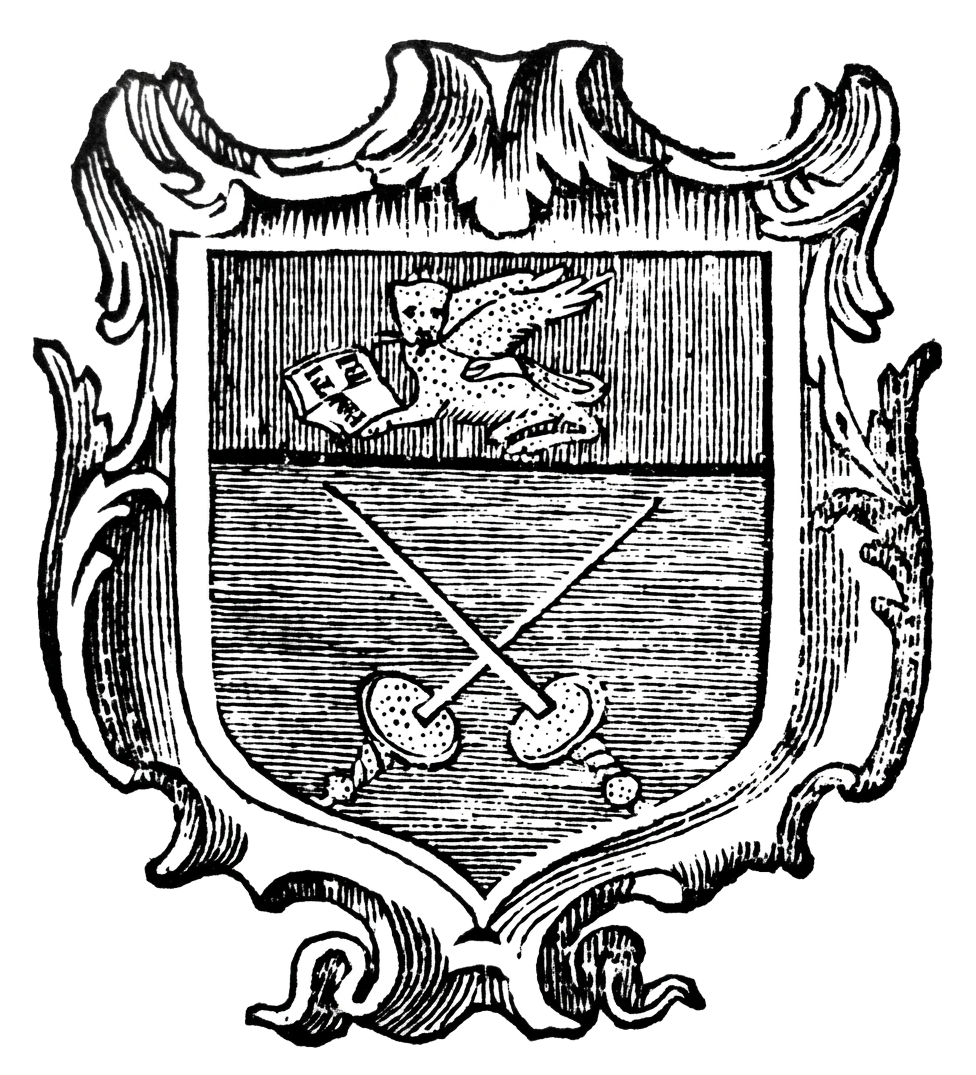
Alexandre Le Clerc de Pulligny⚔Chevalier⚭Madeleine Platel du Plateau
1585, after 1659
Open full biography →Knight of the Order of Saint Mark (Republic of Venice) · Restored to hereditary nobility, 28 May 1623 · Secretary to Charlotte Catherine de La Trémoille, Princess of Taranto · Valet de Chambre and Court Musician of the Duke of Lorraine · Resident of Érize-Saint-Dizier
Arms borne upon the restoration of hereditary nobility, 28 May 1623 Per fess: in chief, on a field barry, a griffin segreant holding an open book; in base, two swords in saltire, points upward, pommels and hilts to base. Within an ornate Baroque cartouche.
- Civic office
- Noble marriage
- Heraldic significance
Born in Nancy, son of Claude II Le Clerc de Pulligny and Claudon Mengin de Pulligny. Served Charlotte Catherine de La Trémoille, Princess of Taranto and wife of Henri de Bourbon-Condé. Later a Knight of Saint Mark and, together with his brother Jean, restored to hereditary nobility on 28 May 1623. Alexandre represents the most likely continuation of the direct ancestral line following Claude II.
Born, Nancy, Lorraine·Died, Érize-Saint-Dizier, Lorraine
Historical Profile
Alexandre's career exemplifies the seventeenth-century pattern by which talented sons of noble houses combined foreign military or court service with a return to office at home. His simultaneous standing as Knight of Saint Mark and valet de chambre of the Duke of Lorraine placed him within two of the most prestigious household structures of early modern Europe.
Parents
Son of Claude II Leclerc de Pulligny (1532–1598) and his second wife Claudon Mengin de Pulligny (1550–1626).
Children
Father of Nicolas Le Clerc (1624–1660), through whom the direct ancestral line continues, and grandfather of Alexandre II Le Clerc, Minor Lord of Lorraine, the bridge figure between the historic Pulligny family and the later Le Claire branches.
Family Significance
Together with Jean, Alexandre rebuilt the family's position after the confiscations suffered during the Reformation. The renewed hereditary nobility of 28 May 1623 is in significant part their work, and through Alexandre and his son Alexandre II the direct line of the House of Le Clerc de Pulligny passes intact into the second half of the seventeenth century and onward to the Leclaire branch.
Legacy
Alexandre's name is preserved both in the records of the Venetian Order of Saint Mark and in the household books of the Dukes of Lorraine. Documentary and genealogical records show that the later Le Claire and Leclaire line of Lorraine and Alsace, from which the modern House descends, issued from his branch.
Sources & Evidence
- Venetian state archives, Order of Saint Mark.
- Household books of the Dukes of Lorraine, valet de chambre and court musician.
- Letters patent of 28 May 1623 restoring the hereditary nobility of the House of Le Clerc de Pulligny.
Children of the House
Nicolas Le Clerc
1624, 1660
Direct ancestral continuation; father of Alexandre II Le Clerc and bearer of the line through the mid-seventeenth century.
Open full biography →
- Generation 26 of 37
Nicolas Le Clerc⚭Anne Fériet de Lezay
1624, 1660
Open full biography →Son of Alexandre Le Clerc de Pulligny and father of Alexandre II Le Clerc; the generation through which the direct ancestral line is carried across the mid-seventeenth century in Lorraine.
Born, Lorraine
Historical Profile
Nicolas Le Clerc (1624–1660) belongs to the generation that carried the family through the most turbulent decades of the seventeenth century, the Thirty Years' War, the French occupations of Lorraine and the long pressure of Louis XIII and Louis XIV on the Duchy.
He stands between his father Alexandre Le Clerc de Pulligny, Knight of Saint Mark, and his son Alexandre II Le Clerc, Minor Lord of Lorraine, by whom the direct ancestral line passes into the eighteenth-century Le Claire family from which the modern House descends.
Parents
Son of Alexandre Le Clerc de Pulligny (1587, after 1659), Knight of Saint Mark.
Children
Father of Alexandre II Le Clerc (1652–1695), Minor Lord of Lorraine.
Family Significance
Nicolas is the quiet generation through whom the direct line continues from the Knights of Saint Mark of 1623 to the Minor Lords of Lorraine of the later seventeenth century.
Children of the House
Alexandre II Le Clerc
1652, 1695
Minor Lord of Lorraine. Direct ancestral continuation, the bridge figure between the historic Pulligny family and the later Le Claire branches.
Open full biography →
- Generation 27 of 37
Alexandre II Le Clerc◆Seigneur⚭Marguerite Thiery de Saint-Baussant
1652, 1695
Open full biography →Minor Lord of Lorraine
- Estate & seigneury
- Noble marriage
Minor Lord of Lorraine and key transitional figure linking the historic Le Clerc de Pulligny family to the subsequent Le Claire branches from which the modern House descends.
Born, Lorraine
Historical Profile
Alexandre II Le Clerc (1652–1695) is identified in later family records as a minor Lord of Lorraine and an important bridge figure between the historic Le Clerc de Pulligny family and the subsequent Le Claire branches.
His life spans the high reign of Louis XIV and the long French pressure on the Duchy of Lorraine that would culminate in the formal annexation of 1766. By his generation the wider Le Clerc family was beginning the slow social transition out of the great ducal offices held by his great-grandfather Claude II and into the more modest seigneurial and bourgeois standing of the later Lorraine line.
Through Alexandre II the direct ancestral line passes to François 'Pierre' Le Claire (1684–?), in whose generation the family surname is consistently recorded for the first time under the Le Claire form.
Parents
Son of Nicolas Le Clerc (1624–1660); grandson of Alexandre Le Clerc de Pulligny, Knight of Saint Mark.
Children
Father of François 'Pierre' Le Claire (1684–?), through whom the direct ancestral line continues into the eighteenth-century Le Claire family.
Family Significance
Alexandre II is one of the key transitional figures linking the historic Pulligny family to the later Le Claire branch from which the modern House descends.
Sources & Evidence
- Genealogical source tradition, later Le Clerc and Le Claire family records identifying Alexandre II as the bridge generation.
Children of the House
François 'Pierre' Le Claire
1684, ?
Direct ancestral continuation, the first generation to bear the Le Claire spelling of the family name.
Open full biography →
- Generation 28 of 37
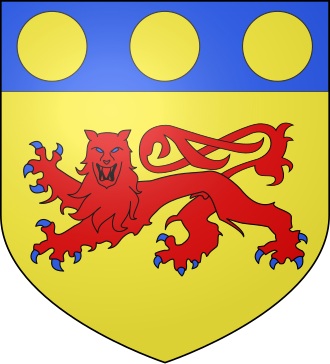
François 'Pierre' Le Claire⚭Marie-Anne Du Moine (known locally as “Nanon”)
1684
Open full biography →Arms of the Le Claire line, as carried into the eighteenth century Or, a leopard rampant gules armed and langued azure; on a chief azure three bezants or.
- Noble marriage
First generation to bear the Le Claire form of the family name. Son of Alexandre II Le Clerc and direct ancestor of the eighteenth-century Le Claire line.
Born, Lorraine / Alsace frontier
Historical Profile
François 'Pierre' Le Claire (b. 1684) stands at the junction between the old Leclerc de Pulligny family of Lorraine and the later Le Claire family of the eighteenth century. By his generation the family name is consistently registered in parish books under the spelling Le Claire, marking the visible transition from the earlier Le Clerc house into the documented Le Claire line.
He lived during the reign of Louis XIV and the integration of Alsace into the Kingdom of France, the moment in which the family began the long eastward movement that would carry it across the Rhine. Through him the direct line continues to his son Jean Pierre Le Claire and ultimately to the modern Le Claire descendants.
Parents
Son of Alexandre II Le Clerc (1652–1695), Minor Lord of Lorraine.
Spouse
Married Marie-Anne Du Moine, known locally as “Nanon”, the familiar Lorraine diminutive by which she appears in parish and household records.
Children
Father of Jean Pierre Le Claire (1718–1793), through whom the direct ancestral line continues.
Family Significance
François 'Pierre' is the first fully documented Le Claire generation in the direct line, the bridge between the Pulligny noble house of Lorraine and the eighteenth-century Le Claire family.
Children of the House
Jean Pierre Le Claire
1718, 1793
Direct ancestral continuation; husband of Jacqueline Van der Vyvere and father of Louis Jean Baptiste Le Claire.
Open full biography →
- Generation 29 of 37
Jean Pierre Le Claire, Très Noble Seigneur⚭Jacqueline Antoinette Catherine Van der Vyvere
1718, 1793
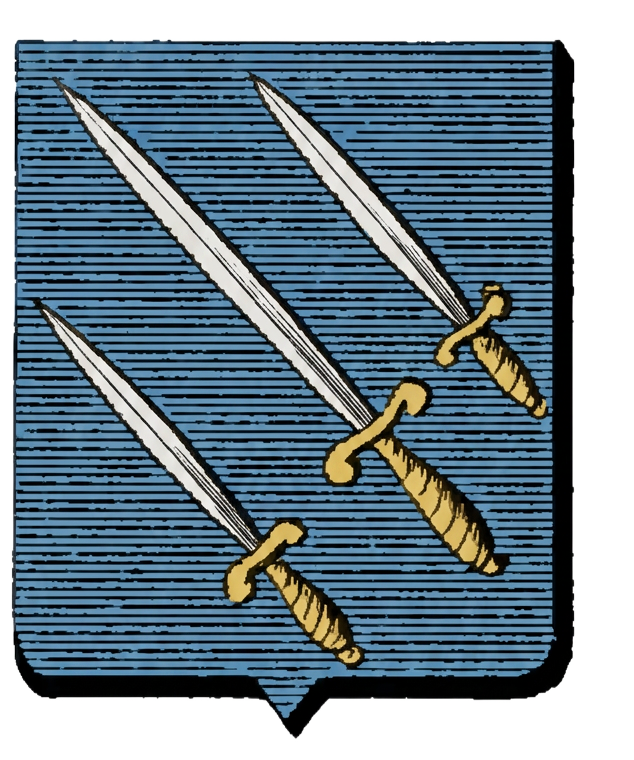
Open full biography →Arms of the Le Claire line, as carried into the eighteenth century Or, a leopard rampant gules armed and langued azure; on a chief azure three bezants or.
Arms of Van de Vyvere, brought in by Jacqueline Azure, three swords argent hilted or, in bend.
- Wealth & dowry
- Noble marriage
- Commercial standing
A principal figure in the documented LeClaire line. Father of the senior French officer Théodore François Joseph Leclaire and husband of an heiress of the Van der Vyvere.
Historical Profile
Jean Pierre Leclaire's generation represents the consolidation of the family's position within the educated and influential classes of Lorraine and Alsace.
That his son entered the officer corps suggests the family possessed sufficient wealth, education and social standing to secure opportunities unavailable to ordinary citizens, a position reinforced by the Van der Vyvere alliance and its accompanying dowry.
Parents
Son of François 'Pierre' Le Claire and Marie-Anne Du Moine, known locally as “Nanon”, of the Lorraine / Alsace frontier.
Spouse
Jacqueline Antoinette Catherine Van der Vyvere (1726–1789), of the established Van der Vyvere family. Research indicates her marriage involved a dowry of approximately 90,000 livres, a sum extraordinary by the standards of the period, associated with major merchants, financiers, office-holders or noble families. By relative status and economic power, the order of magnitude approaches several million pounds in modern equivalence, potentially in the region of £20 million.
Children
Father of at least two sons whose lines diverge here: Louis Jean Baptiste Leclaire (1753–1825), through whom the modern bloodline descends, and Général de division Théodore François Joseph Leclaire (1752–1811), Chevalier of Saint-Louis and Commander of the Legion of Honour, whose career carried the family name into the highest ranks of the Revolution and the Empire.
Family Significance
Through Jean Pierre the family maintained the status and resources necessary to continue its upward trajectory into the late eighteenth century. The Van der Vyvere connection stands as one of the strongest indicators of wealth within the documented family history.
Legacy
From his household emerged the senior officer Théodore François Joseph Leclaire, Chevalier of the Royal and Military Order of Saint-Louis, the most decorated member of the documented French line, and his brother Louis Jean Baptiste Leclaire, through whom the bloodline of the present House continues.
By the late eighteenth century, the children of Jean Pierre Le Claire and Jacqueline Van der Vyvere included a future Général de Division of France, multiple descendants of substantial standing in Alsace and Lorraine, and the branch from which the modern LeClaire family descends. Few generations in the family's history proved as influential as theirs.
Sources & Evidence
- Parish and notarial records of Lorraine, Alsace and the Lower Rhine.
- Marriage and dowry instruments of the Van der Vyvere family.
Children of the House
Théodore François Joseph Leclaire⚭Anne Marie Burger
1752, 1811
Eldest son. Général de division of the Armies of the Republic and Empire, Commander of the Legion of Honour and Chevalier of Saint-Louis; hero of Hondschoote (1793); commander of Strasbourg from 1804 until his death. A collateral branch, his descendants form the military Leclaire line, not the modern bloodline.
Open full biography →'Louis Benjamin' Jean Baptiste Alexis Leclaire⚭Elisabeth J. Grégoire
24 June 1754, 29 July 1825
Direct line, bloodline heir. Younger brother of Général Théodore. Born at Termonde (Dendermonde), Oost-Vlaanderen; died in Paris. Through Louis the family passes into the nineteenth-century Rhineland (Le Clair / Licklär) and ultimately to the modern House of LeClaire.
Open full biography →Marie J. A. Leclaire
1755, 1830
Sister of Théodore and Louis; daughter of Jean Pierre and Jacqueline Van der Vyvere. Part of the generation through which the Lorraine and Flemish inheritances were carried forward into the late eighteenth century.
Open full biography →
- Generation 30 of 37
'Louis Benjamin' Jean Baptiste Alexis Leclaire⚭Elisabeth J. Grégoire
24 June 1754, 29 July 1825
Open full biography →Younger son of Jean Pierre Le Claire and Jacqueline Van der Vyvere; younger brother of Général Théodore François Joseph Leclaire. Through Louis the direct bloodline of the modern House descends into the Rhineland.
Born, Termonde (Dendermonde), Oost-Vlaanderen, Belgium
Historical Profile
Whilst his elder brother Théodore pursued distinction in military service, 'Louis Benjamin' Jean Baptiste Alexis Leclaire carried forward the direct family line. Through Louis, the LeClaire family continued into the nineteenth and twentieth centuries, eventually leading to the modern descendants of the house.
Born at Termonde (Dendermonde) in Oost-Vlaanderen on 24 June 1754 and dying at Paris on 29 July 1825, his life spans an extraordinary arc of European history, the Ancien Régime of his birth, the Revolution of his middle years, the First Empire, and the Bourbon Restoration in which he died. By his generation the family name is most often recorded in its single-word French form, Leclaire. Family records preserve him under his everyday name 'Louis Benjamin', with the full baptismal style Jean Baptiste Alexis Leclaire.
Louis is the direct ancestor of the modern line: from him the descent runs Johann Baptiste Le Clair, Gottfried Leclair, Julius Leclair, Bernhardine Licklär, Monika Ute Licklär, Andrea Michaela Tai-Noble, and Brandon Noble LeClaire. His elder brother Théodore François Joseph Leclaire, Général de division, founded a parallel, and now collateral, military branch.
The direct line preserves a recurring Jean Baptiste naming tradition, Jean Pierre Le Claire → 'Louis Benjamin' Jean Baptiste Alexis Leclaire → Johann Baptiste Le Clair, reflecting the family's French Catholic heritage and providing an additional genealogical link connecting successive generations.
Parents
Son of Jean Pierre Le Claire (1718–1793) and Jacqueline Antoinette Marie Catherine Van der Vyvere (1726–1789), through whom the direct line descends from the historic Le Clerc de Pulligny family of Lorraine and is joined to the seigneurial Van de Vyvere of the Land van Waas.
Siblings
Théodore François Joseph Leclaire⚭Anne Marie Burger
1752, 1811
Eldest brother. Général de division of the Armies of the Republic and Empire, Commander of the Legion of Honour and Chevalier of Saint-Louis. A collateral branch of the family, his descendants form the military Leclaire line, not the modern bloodline.
Open full biography →
- Generation 31 of 37
Johann Baptiste Le Clair⚭Gertrud L. A. de Weels
1796
Open full biography →A generation showing the family name in the Le Clair form, reflecting linguistic and administrative variation.
Historical Profile
Johann Baptiste Le Clair, born in 1796, was raised in the German-speaking territories of the Rhine. With his generation parish registers begin to record the family name in its Germanised forms, Le Clair, Leclair, and ultimately Licklär.
- Generation 32 of 37
Gottfried Leclair⚭Maria E. Maßmann
1842, 1915
Open full biography →A nineteenth-century representative of the Leclair spelling within the family's period of German-speaking assimilation.
Historical Profile
Gottfried Leclair (1842–1915) lived through the unification of Germany under Bismarck, the founding of the German Empire, and died on the eve of the Great War. By his generation the family was wholly integrated into German civic life, though the French origin of the name remained visible in every parish register.
- Generation 33 of 37
Julius Leclair⚭Elisabeth Fitze
1880, 1961
Open full biography →Son of Gottfried Leclair and Maria E. Maßmann; husband of Elisabeth Fitze and father of Bernhardine Licklär, through whom the bloodline continues into the modern German-speaking generation.
Historical Profile
Julius Leclair (1880–1961) carried the family through the upheavals of the early twentieth century, the Wilhelmine Empire, the Great War, the Weimar Republic, the Second World War and the post-war reconstruction of Germany.
Through his marriage to Elisabeth Fitze (1882–1924) the line continues to their daughter Bernhardine Licklär, in whose generation the family surname was registered in its fully Germanised form.
Parents
Son of Gottfried Leclair (1842–1915) and Maria E. Maßmann (1845–1915).
Children
Father of Bernhardine Licklär (1920–1978), through whom the direct bloodline continues.
- Generation 34 of 37
Bernhardine Licklär
1920, 1978
Open full biography →Daughter of Julius Leclair and Elisabeth Fitze; her surname records the fully Germanised form of the family name. Mother of Monika Ute Licklär by Jan Jagt; the two were not married.
Historical Profile
Bernhardine Licklär (1920–1978) represents the generation in which the family surname had been transcribed phonetically into Licklär by Rhineland civil registrars, a quiet, generational erasure of the family's documented French origins.
She had one daughter, Monika Ute Licklär, by Jan Jagt, to whom she was not married. Through Monika the bloodline passes into the contemporary generation in which the French ancestral form of the surname has been formally restored.
Parents
Daughter of Julius Leclair (1880–1961) and Elisabeth Fitze (1882–1924).
Children
Mother of Monika Ute Licklär (b. 1944), through whom the direct bloodline continues.
- Generation 35 of 37
Monika Ute Licklär⚭Anthony Reginald Kwok Cheung Tai
1944
Open full biography →Continuation of the Germanised branch of the LeClaire line; mother of the modern restoration.
Historical Profile
Monika Ute Licklär, born in 1944 in the closing year of the Second World War, carried the family across the post-war reconstruction of Europe. She is the grandmother of Brandon Noble LeClaire, in whom the French form of the family name has been formally restored.
- Generation 36 of 37
Andrea Michaela Tai-Noble⚭Ian Dennis Noble
1966
Modern family, stepfather to Brandon·Ian Dennis Noble
Open full biography →A daughter of the House of LeClaire; the continuation of the bloodline through the Licklär branch, and mother of Brandon Noble LeClaire. Her documented descent runs from Jean Pierre Le Claire and Jacqueline Van der Vyvere through their younger son Louis Jean Baptiste Leclaire, brother of Général Théodore François Joseph Leclaire, and the successive Le Clair, Leclair and Licklär generations of the Rhineland.
Historical Profile
Andrea Michaela Tai-Noble, born in 1966, is a daughter of the House of LeClaire by direct descent through the Licklär branch. She is the mother of Brandon Noble LeClaire and the immediate predecessor in the line through which the family name was restored to its French form.
Through her, the maternal bloodline of the House passes from the German-speaking Licklär generations to the modern restoration of the ancestral French surname LeClaire in her son Brandon.
Her documented lineage descends from Jean Pierre Le Claire (1718–1793) and Jacqueline Van der Vyvere (1726–1789) through their younger son Louis Jean Baptiste Leclaire (1753–1825), then Johann Baptiste Le Clair, Gottfried Leclair (1842–1915), Julius Leclair (1880–1961) and Elisabeth Fitze (1882–1924), Bernhardine Licklär (1920–1978) and Monika Ute Licklär (b. 1944). The military branch of Général Théodore François Joseph Leclaire (1752–1811), brother of Louis, is a collateral line, distinguished, but not the line of descent of the present House.
Spouse
Husband of Andrea Tai-Noble and stepfather to Brandon Noble LeClaire. Ian Dennis Noble is shown here as a present-day family connection only; he is not a member of the LeClaire bloodline and does not appear within the direct ancestral pedigree.
Modern family, stepfather to Brandon
Ian Dennis Noble
Husband of Andrea Tai-Noble and stepfather (not biological father) to Brandon Noble LeClaire. Shown as a present-day family connection only; not a member of the LeClaire bloodline and not part of the direct ancestral pedigree.
- Generation 37 of 37
Brandon Noble LeClaire⚭Abigail Jane Greenland
1995·m. 22 May 2027
Open full biography →Head of the House of LeClaire · Founder of the House of Greenland-LeClaire
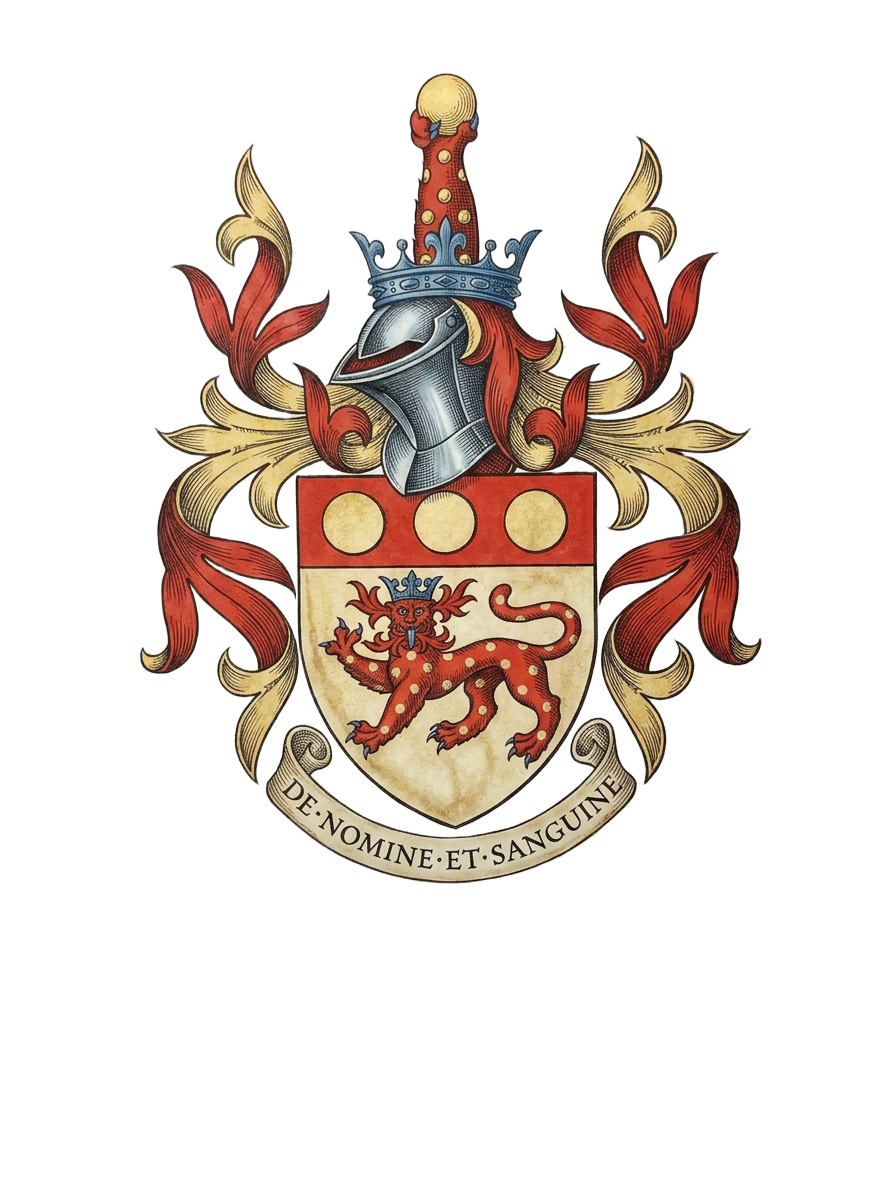
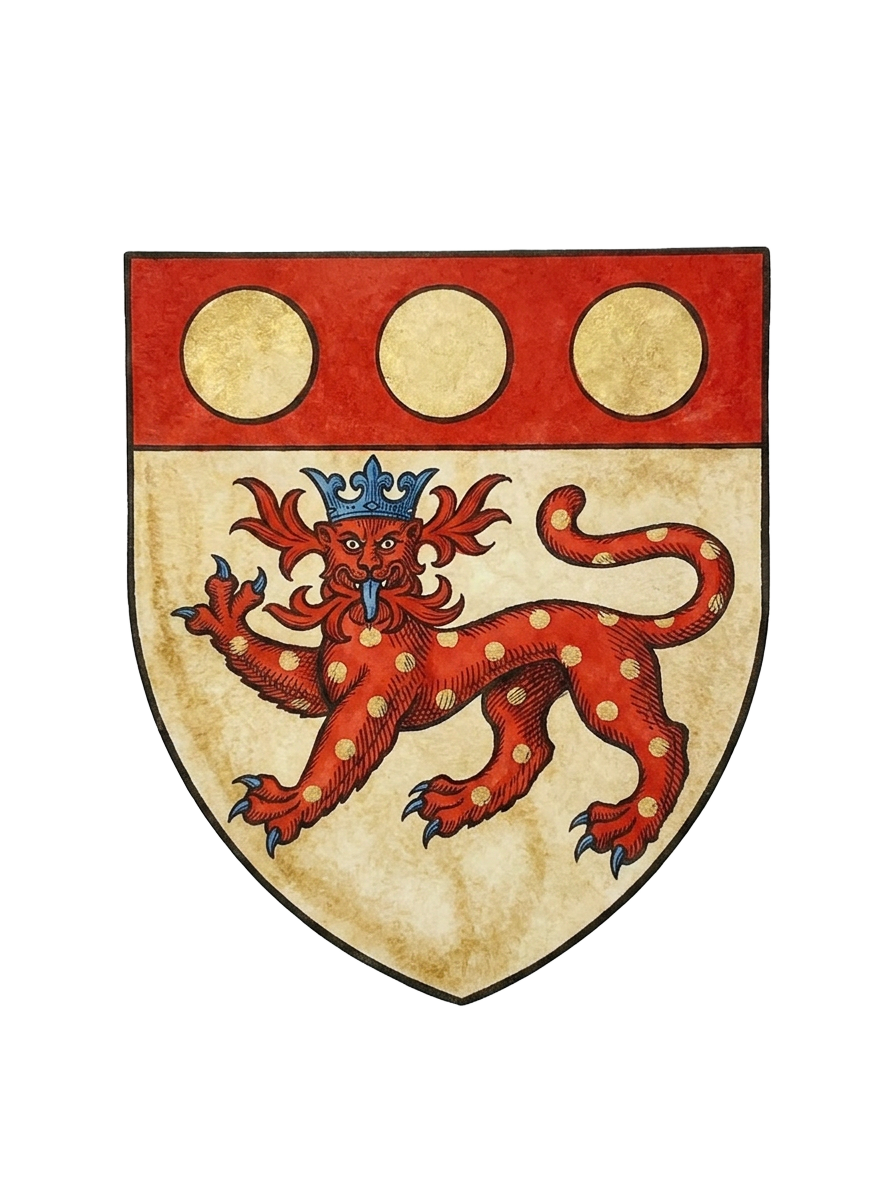
The Armorial Bearings of Brandon Noble LeClaire, to be marshalled with Greenland from 22 May 2027 Arms: Or a Panther incensed passant guardant Gules spotted Or armed langued and crowned with an Ancient Crown flory Azure on a Chief Gules three Roundels Or. Crest: Out of an Ancient Crown flory Azure A Panther's Gamb Gules semy of Roundels holding a Roundel Or. Mantling: Gules doubled Or. Motto: DE NOMINE ET SANGUINE.
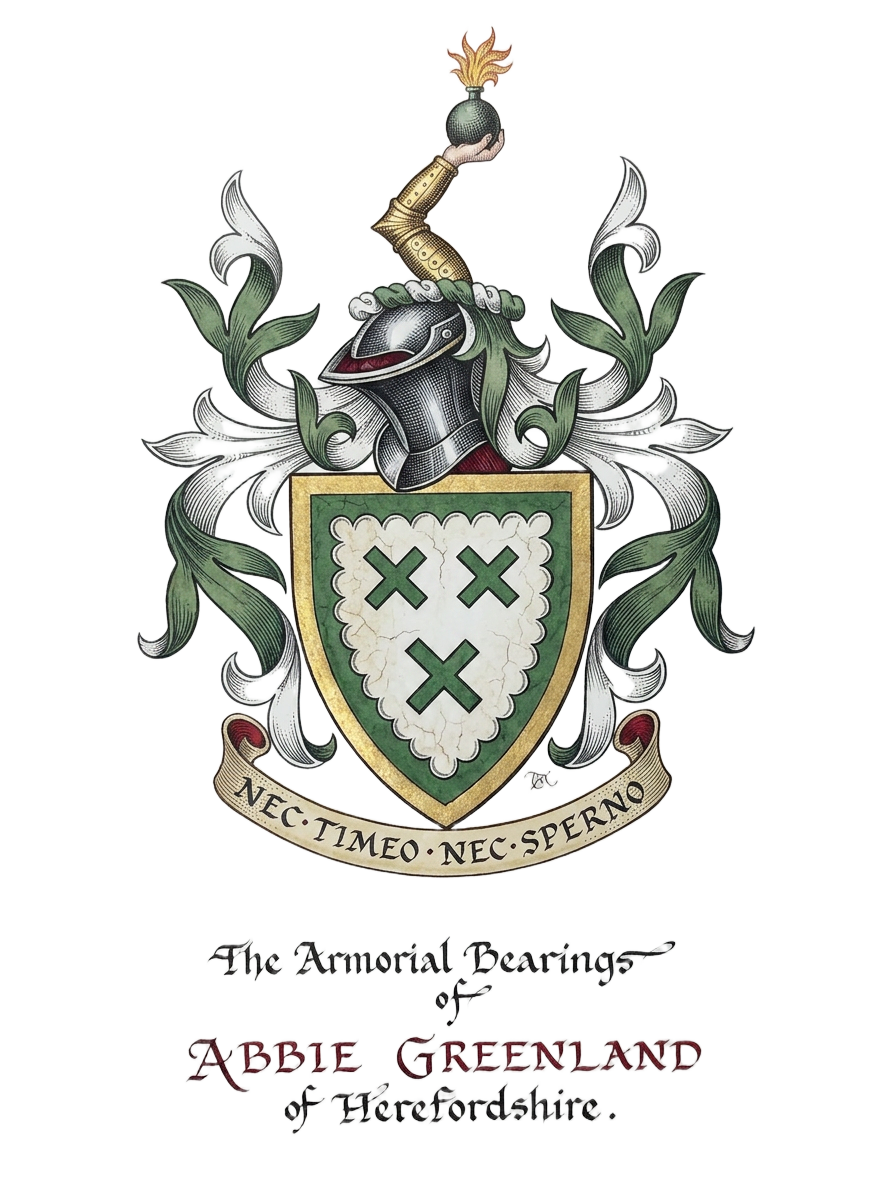
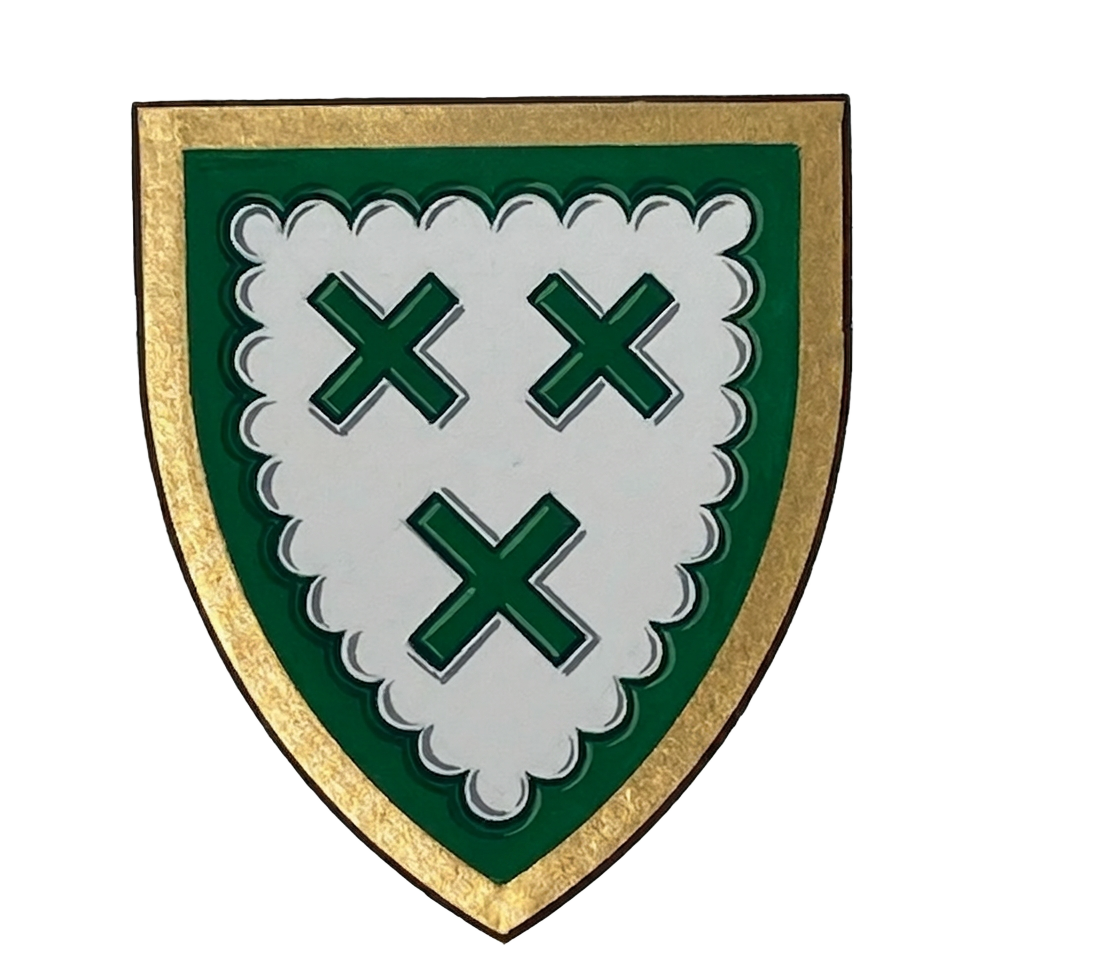
Arms of the Greenland line, borne by Abigail Jane Greenland-Pigott through her maternal Greenland ancestry (Debbie, descended from Colin Greenland) Arms: Argent, three saltires Vert within a bordure engrailed party Or and Vert. Crest: A dexter arm armoured and embowed Or, the hand Proper sustaining a grenade fired Proper. Motto: Nec Timeo Nec Sperno.
- Heraldic significance
- Noble marriage
Modern representative and present head of the House of LeClaire, one of the historic noble and moneyed houses of the Duchy of Lorraine, and, by his 22 May 2027 marriage to Abigail Jane Greenland, founder of the House of Greenland-LeClaire. He has formally restored the ancestral surname LeClaire to continue an eight-hundred-year documented lineage that includes the Sieurs de Pulligny, Auditors of the Chamber of Accounts of Nancy, advancers of capital to the Dukes of Lorraine, and his fifth-great-granduncle Général de Division Théodore François Joseph Leclaire, Commander of the Legion of Honour.
Historical Profile
The most recent documented descendant of the Leclaire line presently researching and reconstructing the family history. Through extensive analysis of genealogical records, military archives, heraldic evidence and historical sources, he has rebuilt a pedigree spanning more than seven centuries.
His research has connected the Leclaire, Greenland, Van der Vyvere, Molyneux and associated families into a single documented lineage, and has formally restored the French ancestral surname LeClaire to the present generation.
Parents
Son of Andrea Michaela Tai-Noble (b. 1966), daughter of Monika Ute Licklär of the German-speaking branch of the LeClaire bloodline. The paternal line is not displayed within the LeClaire pedigree; the LeClaire descent is carried through Brandon's mother. The documented maternal lineage runs Jean Pierre Le Claire and Jacqueline Van der Vyvere → Louis Jean Baptiste Leclaire (elder brother of Général Théodore François Joseph Leclaire) → Johann Baptiste Le Clair → Gottfried Leclair → Julius Leclair → Bernhardine Licklär → Monika Ute Licklär → Andrea Michaela Tai-Noble → Brandon Noble LeClaire.
Spouse
Abigail Jane Greenland-Pigott, daughter of Richard Pigott (Pigott line, paternal) and of Debbie (Greenland line, maternal, descended from Colin Greenland). Greenland arms: Argent, three saltires Vert within a bordure engrailed party Or and Vert. Married 22 May 2027; together the first generation of the emerging Greenland-LeClaire identity.
Children
The first generation of the House of Greenland-LeClaire, the modern continuation of the line.
Family Significance
Brandon stands as the present custodian of the House, the modern figure in whom the documented continuity from the medieval Le Clerc, through the Sieurs de Pulligny and the Chevalier of Saint-Louis, to the contemporary line is consciously held and preserved.
By his marriage to Abigail Jane Greenland he founded the House of Greenland-LeClaire, the modern continuation of the line.
Legacy
Acts as the modern custodian of the family's history, preserving and expanding knowledge of the lineage for future generations.
Author of the present archive, the definitive digital record of the House of LeClaire and the House of Greenland-LeClaire.
Sources & Evidence
- Civil registers of birth and surname adoption.
- Genealogical reconstruction of the LeClaire, Greenland, Van der Vyvere and Molyneux families.
- Heraldic records of the House of LeClaire and the House of Greenland.
Present generation
The line of descent, generation by generation
- Wigeric of Lotharingia (before 922), married Cunigunda — the earliest recorded ancestor in this pedigree.
- Gozlin of Bidgau (c. 910 – c. 943), married Oda of Metz — child of Wigeric of Lotharingia.
- Godfrey "the Captive" of Verdun (c. 935 – c. 1005), married Mathilde of Saxony — child of Gozlin of Bidgau.
- Gerberge of Verdun, married Folmar of Metz — child of Godfrey "the Captive" of Verdun.
- Gottfried of Metz, married Judith of Luxembourg — child of Gerberge of Verdun.
- Simon de Parroye — child of Gottfried of Metz.
- Sicard (Simon II) de Parroye — child of Simon de Parroye.
- Odoin I de Froville — child of Sicard (Simon II) de Parroye.
- Odon II de Froville, married Adélaïde de Neuviller — child of Odoin I de Froville.
- Mathilde de Parroy, married Simon de Froville — child of Odon II de Froville.
- Simon I de Parroye, married Mathilde — child of Mathilde de Parroy.
- Albert de Parroye — child of Simon I de Parroye.
- Albert de Haute-Pierre (c. 1172 – c. 1222) — child of Albert de Parroye.
- Albert de Haute-Pierre (20 October 1231) — child of Albert de Haute-Pierre.
- Liébaud de Haute-Pierre (1281), married Isabelle — child of Albert de Haute-Pierre.
- Marguerite de Haute-Pierre, married Jean II de Toullon — child of Liébaud de Haute-Pierre.
- Thiébaud (Liébaud) de Toullon (late 13th century – c. 1343) — child of Marguerite de Haute-Pierre.
- Catherine de Haute-Pierre (late 13th / early 14th century), married Jacques de Gircourt — child of Thiébaud (Liébaud) de Toullon.
- Mengin Le Clerc (c. 1310 – after 1355), married Catherine de Gircourt — husband of Catherine de Gircourt, daughter of Jacques de Gircourt and Catherine de Haute-Pierre, through whom this pedigree continues upward.
- Colin Le Clerc, married Marguerite Petitgout — child of Mengin Le Clerc.
- Jehan Leclerc de Pulligny (c. 1410 – c. 1465), married N. de Pulligny — child of Colin Le Clerc.
- Mengin II Le Clerc, married Mengette — child of Jehan Leclerc de Pulligny.
- Claude Leclerc de Pulligny (c. 1485 – 1562), married Catherine de Trèves de Xirocourt — child of Mengin II Le Clerc.
- Claude II Leclerc de Pulligny (1532 – 1598), married Claudon Galland de Pulligny (1st) · Claudon Mengin de Pulligny (2nd) — child of Claude Leclerc de Pulligny.
- Alexandre Le Clerc de Pulligny (1585 – after 1659), married Madeleine Platel du Plateau — child of Claude II Leclerc de Pulligny.
- Nicolas Le Clerc (1624 – 1660), married Anne Fériet de Lezay — child of Alexandre Le Clerc de Pulligny.
- Alexandre II Le Clerc (1652 – 1695), married Marguerite Thiery de Saint-Baussant — child of Nicolas Le Clerc.
- François 'Pierre' Le Claire (1684), married Marie-Anne Du Moine (known locally as “Nanon”) — child of Alexandre II Le Clerc.
- Jean Pierre Le Claire, Très Noble Seigneur (1718 – 1793), married Jacqueline Antoinette Catherine Van der Vyvere — child of François 'Pierre' Le Claire.
- 'Louis Benjamin' Jean Baptiste Alexis Leclaire (24 June 1754 – 29 July 1825), married Elisabeth J. Grégoire — child of Jean Pierre Le Claire, Très Noble Seigneur.
- Johann Baptiste Le Clair (1796), married Gertrud L. A. de Weels — child of 'Louis Benjamin' Jean Baptiste Alexis Leclaire.
- Gottfried Leclair (1842 – 1915), married Maria E. Maßmann — child of Johann Baptiste Le Clair.
- Julius Leclair (1880 – 1961), married Elisabeth Fitze — child of Gottfried Leclair.
- Bernhardine Licklär (1920 – 1978) — child of Julius Leclair.
- Monika Ute Licklär (1944), married Anthony Reginald Kwok Cheung Tai — child of Bernhardine Licklär.
- Andrea Michaela Tai-Noble (1966), married Ian Dennis Noble — child of Monika Ute Licklär.
- Brandon Noble LeClaire (1995), married Abigail Jane Greenland — child of Andrea Michaela Tai-Noble.
IntroductionThe origins of the House of LeClaireFrom the Carolingians and the seigneurs of Parroye and Haute-Pierre to the present descendant.ExpandCollapse
The LeClaire family is a documented noble lineage of the historic Duchy of Lorraine. Its pedigree is anchored in primary record by Mengin Le Clerc of Lorraine, born c. 1310, whose surviving act of sale is dated 1355, and its earlier recorded ancestry runs through his wife Catherine de Gircourt into the seigneurial houses of Gircourt, Haute-Pierre, Toullon and Parroye, and so to the comital house of Metz and the house of Ardennes.
The earlier recorded ancestry of the House rises through Mengin's wife, Catherine de Gircourt, daughter of Jacques de Gircourt and Catherine de Haute-Pierre, and so through the seigneurial houses of Toullon, Haute-Pierre and Parroye, the comital house of Metz, the house of Ardennes and the Carolingians. Mengin himself, active by the middle of the fourteenth century, anchors the pedigree in primary record with his surviving act of sale of 1355. His descendants served the Dukes of Lorraine as seigneurs, treasurers, magistrates and gentlemen of the household, and produced figures of European standing including Blessed Alix Le Clerc, Pierre Leclerc du Vivier and Chrestienne Le Clerc du Vivier.
Across more than seven centuries the family passed through the Le Clerc de Pulligny seigneurs of France, the Leclerc du Vivier, the Rhineland Le Clair and Licklär branches, and the British Le Claire line, culminating today in the modern House of Greenland-LeClaire and its most recent descendant, Brandon Noble LeClaire.
Direct answersWho are the LeClaire family?Origins, earliest records, arms, surname variants and the present custodian.ExpandCollapse
Summary
The LeClaire family is a documented European family lineage whose surviving history includes records from Lorraine, Pulligny, Nancy and later branches of the family. This website brings together the family pedigree, archival evidence, heraldry, biographies and historical research associated with the lineage. The descent is supported by surviving documentary and genealogical records and is presented here as documented history, not as conjecture.
Who are the LeClaire family?
The LeClaire family is a documented European family lineage originating in the historic Duchy of Lorraine, recorded across nearly seven centuries under the spellings Le Clerc, Leclerc, Leclaire, Le Claire, Leclair, Le Clair and Licklär. Its members served the Dukes of Lorraine as seigneurs, treasurers, magistrates and gentlemen of the household, and the line descends today to Brandon Noble LeClaire, present custodian of the archive.
Who is Brandon Noble LeClaire?
Brandon Noble LeClaire — also recorded as Brandon LeClaire and known as Bran LeClaire — is the present custodian and head of the House of LeClaire, and the latest documented descendant of the Le Clerc de Pulligny line of Lorraine. He is a British business strategist specialising in AI search, digital growth and medieval genealogy, and he maintains this archive of the family's records, pedigree and heraldry.
Where did the LeClaire family originate?
The LeClaire family originated in Lorraine, in what is now north-eastern France, with associated seats and holdings at Pulligny, Nancy, Deyvillers, Gircourt and Froville. Later branches are recorded in France, the Rhineland, Belgium and Britain.
What is the earliest record of the LeClaire family?
The earliest primary record anchoring the pedigree is the surviving act of sale of 1355 by Mengin Le Clerc of Lorraine, active by the middle of the fourteenth century. The family's earlier recorded ancestry is traced through his wife Catherine de Gircourt into the Gircourt, Haute-Pierre, Toullon and Parroye houses of Lorraine.
Is the LeClaire family lineage documented?
Yes. The LeClaire family lineage is documented and evidenced. The pedigree is supported by surviving documentary and genealogical records, including acts of sale, letters patent, parish and civil registers, notarial and court documents, heraldic records and published genealogies. Where an individual point remains unresolved, it is marked on the relevant page as under active research.
What is the LeClaire family coat of arms?
The arms recorded for the house descend from the Le Clerc de Pulligny grants of the fifteenth to seventeenth centuries, with the modern arms of Brandon Noble LeClaire ensigned of an Ancient Crown flory Azure and borne under the mottoes De Nomine et Sanguine and Nec Timeo Nec Sperno. Every recorded grant, blazon and crest is set out in the heraldry section of the archive.
What is the connection between LeClaire, Le Clerc and Leclerc?
LeClaire, Le Claire, Le Clerc, Leclerc, Leclair, Le Clair and Licklär are recorded orthographic variants of one family name, arising from French, Lorrain and German scribal practice over several centuries. They denote the same documented lineage rather than separate families, and this Lorraine armigerous house is distinct from unrelated, non-armigerous Canadian and Franco-American families of similar surname.
The present custodianWho is Brandon LeClaire?Direct answers on Brandon Noble LeClaire, his role, descent and arms.ExpandCollapse
Who is Brandon LeClaire?
Who is Brandon LeClaire?
Brandon LeClaire — recorded in full as Brandon Noble LeClaire and known also as Bran LeClaire — is the present custodian and head of the House of LeClaire, the documented Lorraine family recorded under the spellings Le Clerc, Leclerc, Leclaire, Le Claire, Leclair, Le Clair and Licklär. He is British, based in England, and is the latest documented descendant of the Le Clerc de Pulligny line. He maintains this archive of the family's records, pedigree and heraldry.
What does Brandon Noble LeClaire do?
Brandon Noble LeClaire is a British business strategist working in AI search, answer-engine optimisation and digital growth. Alongside that work he is the custodian, editor and genealogist of the House of LeClaire archive, where he compiles, transcribes and grades the family's documentary evidence.
Is Brandon LeClaire the same person as Brandon Noble LeClaire?
Yes. Brandon LeClaire, Bran LeClaire and Brandon Noble Greenland-LeClaire all refer to the same person: Brandon Noble LeClaire, present custodian of the House of LeClaire. Brandon Noble LeClaire is his full recorded name; the others are shortened or married-name forms of the same individual.
How is Brandon LeClaire related to the LeClaire family of Lorraine?
Brandon Noble LeClaire descends in a continuous documented line from Mengin Le Clerc of Lorraine, whose act of sale of 1355 anchors the pedigree, through the Le Clerc de Pulligny branch ennobled by letters patent in 1464. The descent from that line to Brandon LeClaire is set out generation by generation in the pedigree on this page and in the family history.
What are the arms of Brandon LeClaire?
The arms borne by Brandon Noble LeClaire descend from the Le Clerc de Pulligny grants of the fifteenth to seventeenth centuries, ensigned of an Ancient Crown flory Azure and borne under the mottoes DE NOMINE ET SANGUINE and NEC TIMEO NEC SPERNO. The full blazon, crest and mantling are recorded in the heraldry section of this archive.
At a glanceFacts from the pedigreeDates, places and generations drawn from the direct line.ExpandCollapse
Before 1310The earlier recorded forebearsGircourt, Toullon, Haute-Pierre and Parroye — the seigneurial houses of Lorraine.ExpandCollapse
The wider houseNotable family members and relativesDistinguished members of the collateral branches.ExpandCollapse
The Wider House
Notable Family Members & Relatives
Distinguished members of collateral branches of the wider Le Clerc family who do not appear on the direct ancestral line but form part of the broader documented history of the House.
1576, 1622
Blessed Alix Le ClercFounder of the Congregation of Notre Dame and one of the most influential female educational reformers in European history.
1530, 1598
Pierre Leclerc du Vivier
Treasurer General of Lorraine, Superintendent of Finances and adviser to leading princely houses including the House of Lorraine.
Chrestienne Le Clerc du Vivier
Founder of the Discalced Carmelite convent of Charenton. Her monument is preserved in the Louvre Museum.
1705, 1769
Nicolas II Le Clerc
Gentleman of the Duchess of Lorraine, wealthy merchant, estate administrator and tax farmer. Represents a collateral branch of the family documented into the modern era.
HeraldryHeraldic noteHow the arms of the House descend from Le Clerc de Pulligny.ExpandCollapse
Heraldic Note
The Le Claire family descends from the historic Le Clerc de Pulligny line of Lorraine. Whilst later collateral branches continued under the surname Le Clerc, the Le Claire branch represents a distinct continuation of the same historic family. The family's heraldic identity derives from the historic Pulligny lineage and its ancestral arms rather than the later collateral Le Clerc branch documented into the twenty-first century.