Renaissance
Jean Le Clerc
1586, 1633
Nancy, Lorraine
Knight of the Order of Saint Mark (Republic of Venice) · Court Painter to the Dukes of Lorraine · Hereditary nobility restored, 1623
- Military distinction
- Civic office
- Heraldic significance
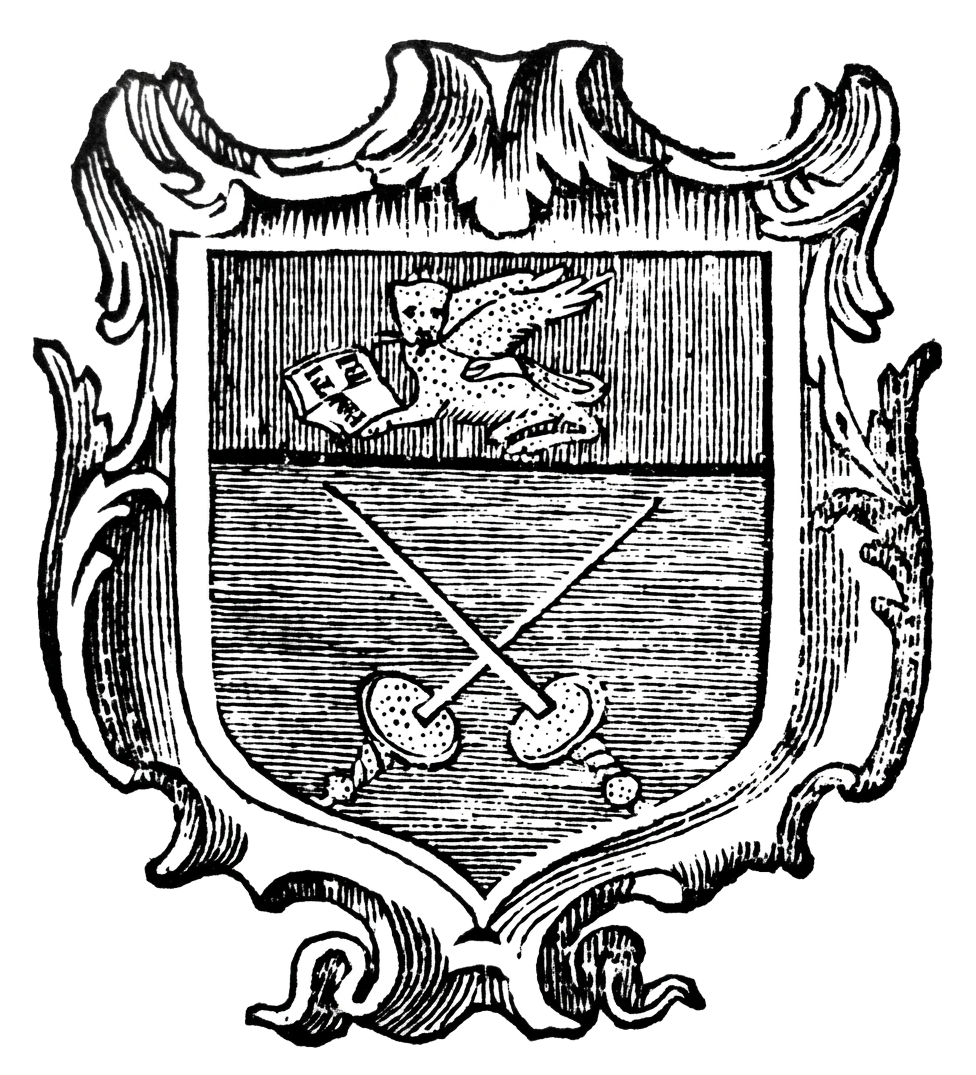
Per fess: in chief, on a field barry, a griffin segreant holding an open book; in base, two swords in saltire, points upward, pommels and hilts to base. Within an ornate Baroque cartouche.
Explore in Armorial →Soldier of the Republic of Venice against the Ottomans, Knight of Saint Mark, and one of the most distinguished painters ever produced by Lorraine, the figure who, with his brother Alexandre, restored the hereditary nobility of the House of Le Clerc de Pulligny in 1623.
Jean Le Clerc, eldest son of Claude II Leclerc de Pulligny, was born at Nancy in 1586 into a house that had only recently suffered the confiscation of its nobility for his father's conversion to Protestantism. His own life would be devoted, in different ways, to repairing that loss.
Around 1602 he travelled to Venice, then one of the great military and artistic powers of the Mediterranean. He entered the service of the Republic and fought in its long campaigns against the Ottoman Empire, distinguishing himself sufficiently to be received into the Order of Saint Mark, the senior honour by which the Serenissima rewarded loyalty and valour.
Alongside his military service he became one of the most accomplished painters produced by Lorraine. Trained in the Italian and Venetian schools, he worked in the manner of the Caravaggesque masters and absorbed the dramatic chiaroscuro of early-seventeenth-century Venice. His paintings are recorded in churches and collections of Lorraine and northern Italy.
On his return to the Duchy he entered the service of the Dukes of Lorraine as court painter, combining artistic achievement with the diplomatic and ceremonial duties of a trusted court servant. Through his loyalty, his military distinction and his international reputation, he played a leading role in the formal restoration of the hereditary nobility of the House of Le Clerc de Pulligny by letters of 1623, reversing the confiscations imposed in his father's lifetime.
He died in 1633, having helped to restore his family's standing and having carried the name of Le Clerc into the artistic and military memory of two of the great states of early modern Europe.
Biographical Record
Parents+
Son of Claude II Leclerc de Pulligny (1532–1598) and his first wife Claudon Galland de Pulligny.
Historical Profile+
Jean's career unfolded against the long Venetian-Ottoman struggle for control of the eastern Mediterranean and the parallel flowering of Caravaggesque painting in Italy. To combine distinguished military service to the Republic with a successful artistic career, and then to return home as court painter to one's hereditary sovereign, was an exceptional trajectory by any standard of the period.
Family Significance+
Together with his brother Alexandre, Jean rebuilt the position the family had lost during the Reformation crisis. The restoration of hereditary nobility in 1623 is in large part their work, and through them the House of Le Clerc de Pulligny passed intact into the second half of the seventeenth century.
Legacy+
Jean Le Clerc is remembered both as a Knight of Saint Mark and as one of the finest painters Lorraine produced in the early seventeenth century. His career stands as the clearest single example in the family's history of nobility recovered through personal merit, military, artistic and diplomatic.
Sources & Evidence+
- Venetian state archives, Order of Saint Mark, early seventeenth century.
- Lorraine court records, appointment as court painter to the Dukes of Lorraine.
- Letters patent of 1623 restoring the hereditary nobility of the House of Le Clerc de Pulligny.
Story Mode
Their chapter in the dynastyJean Le Clerc belongs to the Wars of Religion. Born around 1586 in Nancy, Lorraine, Knight of the Order of Saint Mark (Republic of Venice).
Jean's career unfolded against the long Venetian-Ottoman struggle for control of the eastern Mediterranean and the parallel flowering of Caravaggesque painting in Italy. To combine distinguished military service to the Republic with a successful artistic career, and then to return home as court painter to one's hereditary sovereign, was an exceptional trajectory by any standard of the period.
Together with his brother Alexandre, Jean rebuilt the position the family had lost during the Reformation crisis. The restoration of hereditary nobility in 1623 is in large part their work, and through them the House of Le Clerc de Pulligny passed intact into the second half of the seventeenth century.
In France, Henry III ruled. Lorraine answered to Charles III the Great. Across the wider world, french wars of religion was reshaping events.
Jean Le Clerc is remembered both as a Knight of Saint Mark and as one of the finest painters Lorraine produced in the early seventeenth century. His career stands as the clearest single example in the family's history of nobility recovered through personal merit, military, artistic and diplomatic.
The World They Lived In
Jean's lifetime · 1586–1633
Who governed their world
- King of FranceHenry III
- Duke of LorraineCharles III the Great
- Holy Roman EmperorRudolf II
Contemporary figures
- William ShakespearePlaywright · 1564–1616
- Johannes KeplerAstronomer · 1571–1630
- Pierre CorneilleDramatist · 1606–1684
- Blaise PascalMathematician · 1623–1662
- Antonie van LeeuwenhoekMicroscopist · 1632–1723
Major events during their life
- French Wars of Religion1562–1598 · France
- Thirty Years' War1618–1648 · Germany
Devastates the Holy Roman Empire and Lorraine.
- Restoration of arms — Le Clerc de Pulligny1623 · Lorraine
Heraldic confirmation under Duke Henry II.
Dynasty Explorer
See the family network
Legacy Flow
Trace what they passed on
How Did I Get Here?
Path from Jean to Brandon