Renaissance
Claude Leclerc de Pulligny
c. 1485, 1562
Pulligny, Lorraine
Valet de Chambre to Duke Antoine of Lorraine · Seigneur of Pulligny, Ceintrey, Voinémont, Malaucourt-sur-Seille, Chamagne, Érize-Saint-Dizier and Saint-Dizier
⚭ Catherine de Trèves de Xirocourtc. 1515, 1581
- Estate & seigneury
- Civic office
- Noble marriage
- Heraldic significance
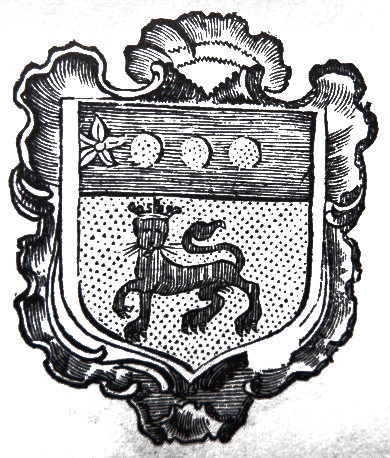
Or, a leopard gules armed, langued and crowned azure, on a chief of the same charged with three bezants or.
Explore in Armorial →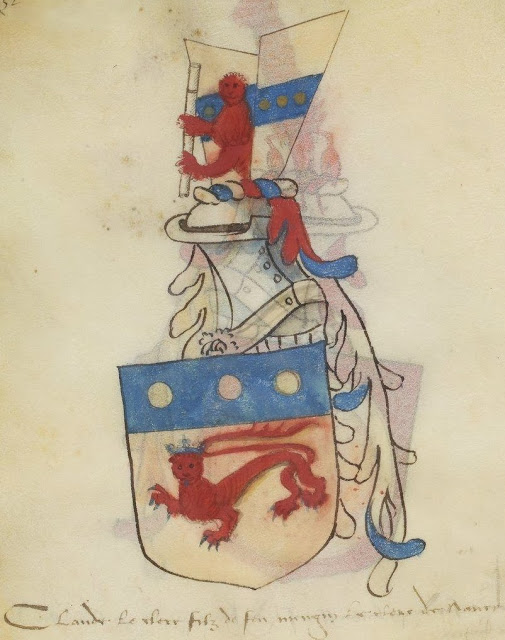
Or, a lion rampant gules crowned azure, on a chief azure three bezants or; with crest of a demi-lion gules issuant from a torse and helm, mantled gules and azure.
Explore in Armorial →Allied House, Spouse's Arms
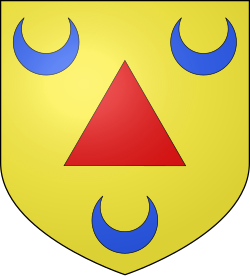
Or, a pile (triangle) gules between three crescents azure, two in chief and one in base.
Explore Allied Arms →A major patriarch of the House of Le Clerc. Merchant of silk and wool cloth, valet de chambre to Duke Antoine, Conseiller and Auditeur at the Chamber of Accounts under Charles III, and seigneur of multiple lordships in Lorraine.
Claude Leclerc de Pulligny, also recorded as Claudin Leclerc de Pulligney, was born in Nancy around 1485 and died there on 7 November 1562, at 27 rue de La Boudière (now in Nancy's Grande Rue). He was buried in the Chapel of Sainte-Croix, or Notre-Dame-de-Pitié, at the Basilica of Saint-Epvre in Nancy, which he and his wife had founded.
He rose through commerce, ducal service and noble recognition to become a leading member of the high bourgeois and noble society of Lorraine. A merchant of silk and wool cloth, he held the privilege of selling silk and wool to the duke and officers of the court. He was granted letters of ennoblement by Duke Antoine of Lorraine on 5 May 1512, as Claude Le Clerc, son of the late Mengin II Le Clerc and Mengette his wife.
He was valet de chambre to Duke Antoine on 12 March 1540. Under Duke Charles III, on 9 February 1553, he received the first place of Conseiller and Auditeur in the Chamber of Accounts (succeeding Gaspard de Beurges, his brother-in-law, and Christophe Didelot). He was voué of Saint-Nicolas-du-Port in 1554, and again recorded as valet de chambre of Charles III in 1562.
His wealth was substantial: he owned a decorated house bearing his arms in Nancy, possessed the fief of Pulligny and a chapel at Saint-Epvre, and was écuyer and seigneur in part of Pulligny, Ceintrey, Voinémont, Malaucourt, Chamagne and Pulnoy. His wife Catherine de Trèves held Xirocourt, Erizé-Saint-Dizier and the two Marasses. He also took lands in fief from the inheritance of his brother-in-law Jean de Trèves on 16 September 1550.
His career shows the true character of the family's rise, built not on one source of status, but on trade, office, court service, landholding and marriage.
Biographical Record
Parents+
Son of Mengin II Le Clerc and Mengette his wife.
Spouse+
Married in 1530 to noble Catherine de Trèves de Xirocourt, daughter of Pierre de Trèves (ennobled 1509) and Barbe de Véel; dame of Xirocourt, Erizé-Saint-Dizier and the two Marasses. Still living with Claude in 1557; widowed at 27 rue de La Boudière in 1572. Sister of Jean de Trèves (who travelled to Jerusalem in 1538), of Gilles de Trèves, canon and dean of Saint-Maxe, builder in 1555 of the Chapel of the Annunciation (the Chapel of the Princes), wealthy enough to lend large sums to Duke Antoine of Lorraine, and sister-in-law of Gaspard de Beurges, lord of Remicourt and Houdemont, Conseiller and Auditeur at the Chamber of Accounts (1551). Through this marriage Claude's property was important enough to richly endow four daughters and leave substantial inheritances to four sons.
Children+
Issue: Claudon Le Clerc (m. 1546 Nicolas de Lescut de Saint-Germain, count palatine of the Lateran palace and imperial court by letters of Charles V, 20 May 1544); Barbe Le Clerc (m. 1554 Jean de Lescut de Saint-Germain, lord of Pixerécourt, lieutenant general of the bailliage of Nancy, Conseiller and Auditeur at the Chamber of Accounts from 5 May 1563); Jean Le Clerc (m. 1567 Élisabeth Champenois de Nogent); Marie Le Clerc (m. Nicolas Humbelot, ennobled by the Duke of Lorraine 23 February 1564, lord of Sergueux and Langres, bailli of Châtillon-sur-Seine); Pierre Leclerc du Vivier (before 1524, 1598, m. 1561 Anne Fériet de Varangéville); Claude II Leclerc de Pulligny (1532–1598); and Mengin III Le Clerc, Abbot of Saint-Thierry, valet de chambre ordinaire of the duke from 10 September 1556.
Historical Profile+
Claude's ennoblement in 1512 confirmed the standing achieved by his father Mengin II and placed the family within the recognised noble society of Lorraine. The arms recorded for the family at this point are: Or, a leopard gules, armed, langued and crowned azure, on a chief azure three bezants or.
His possession of the fief of Pulligny, his house in Nancy decorated with his arms, and his chapel at Saint-Epvre all point to a man of substantial means and public identity.
Family Significance+
Claude is the great branching patriarch of the House of Le Clerc. Through him the family enters the seigneurial, court and financial elite of Lorraine simultaneously. His marriage to Catherine de Trèves de Xirocourt linked the Le Clercs to another recently ennobled but powerful Lorraine family with considerable wealth and ducal influence.
Legacy+
His life represents one of the clearest moments when the family's civic, commercial and noble identities became fully joined. His descendants, through the principal line, the Vivier branch and the Pulligny continuation, carried the name into the seventeenth and eighteenth centuries.
Sources & Evidence+
- Documented record, letters of ennoblement, 5 May 1512, Duke Antoine of Lorraine.
- Documented record, appointment to the Chamber of Accounts, 9 February 1553, Duke Charles III of Lorraine.
- Documented record, burial at the Basilica of Saint-Epvre, Nancy, 1562.
- Genealogical source tradition, Guy de Rambaud and associated Lorraine genealogical compilations.
Direct Line
14 generations to Brandon Noble LeClaire
Story Mode
Their chapter in the dynastyClaude Leclerc de Pulligny belongs to the Renaissance. Born around 1485 in Pulligny, Lorraine, Valet de Chambre to Duke Antoine of Lorraine. They stand at generation 5 of 19 in the documented bloodline that leads to the present House of Greenland-LeClaire.
Claude's ennoblement in 1512 confirmed the standing achieved by his father Mengin II and placed the family within the recognised noble society of Lorraine. The arms recorded for the family at this point are: Or, a leopard gules, armed, langued and crowned azure, on a chief azure three bezants or.
Marriage to Catherine de Trèves de Xirocourt bound the line to a wider noble network. Ennoblement followed on 1512 with his brother Thierry Le Clerc, by letters patent of the Duke of Lorraine. Their children carried the name into the next generation.
In France, Charles VIII ruled. Lorraine answered to René II. Across the wider world, battle of nancy was reshaping events.
His life represents one of the clearest moments when the family's civic, commercial and noble identities became fully joined. His descendants, through the principal line, the Vivier branch and the Pulligny continuation, carried the name into the seventeenth and eighteenth centuries.
The World They Lived In
Claude's lifetime · 1485–1562
Who governed their world
- King of FranceCharles VIII
- Duke of LorraineRené II
- Holy Roman EmperorFrederick III
Contemporary figures
- Leonardo da VinciPolymath · 1452–1519
- Martin LutherReformer · 1483–1546
Major events during their life
- Columbus reaches the Americas1492 · World
- Re-grant of arms to Claude Le Clerc de Pulligny1512 · Lorraine
- Luther's 95 Theses — Reformation begins1517 · Germany
- French Wars of Religion1562–1598 · France
Dynasty Explorer
See the family network
Legacy Flow
Trace what they passed on
How Did I Get Here?
Path from Claude to Brandon