Renaissance
Alexandre Le Clerc de Pulligny
⚭Madeleine Platel du Plateau
1585, after 1659
Nancy, Lorraine
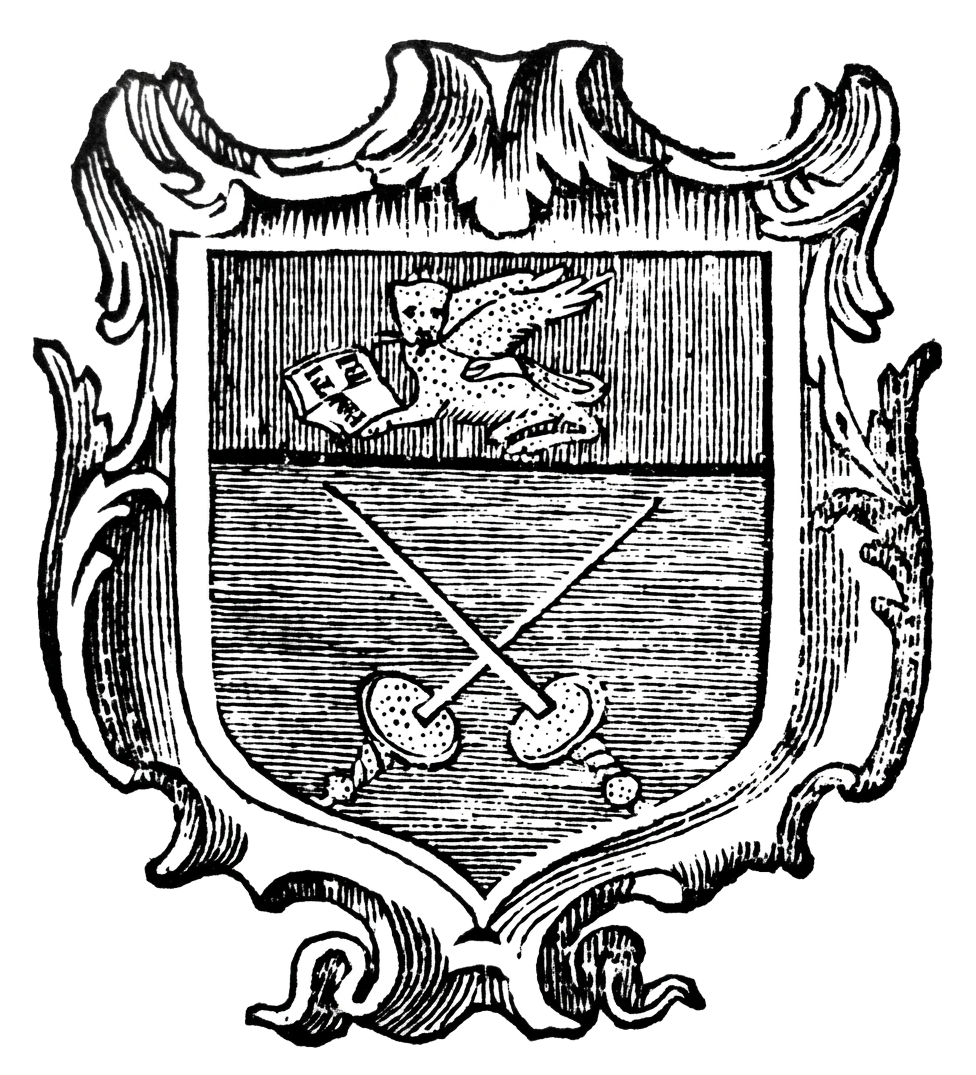
Knight of the Order of Saint Mark (Republic of Venice) · Restored to hereditary nobility, 28 May 1623 · Secretary to Charlotte Catherine de La Trémoille, Princess of Taranto · Valet de Chambre and Court Musician of the Duke of Lorraine · Resident of Érize-Saint-Dizier
Born in Nancy, son of Claude II Le Clerc de Pulligny and Claudon Mengin de Pulligny. Served Charlotte Catherine de La Trémoille, Princess of Taranto and wife of Henri de Bourbon-Condé. Later a Knight of Saint Mark and, together with his brother Jean, restored to hereditary nobility on 28 May 1623. Alexandre represents the most likely continuation of the direct ancestral line following Claude II.
The Name Through History
A single continuous line, recorded under many forms as it passed through Lorraine, France, the Rhineland and Britain.
De Parroye / de Haute-Pierre
before 1310
Seigneurial houses of Lorraine from which the maternal ancestry descends
Moingins dis li clers
c. 1310 – 1400
Lorrain vernacular byname, 1355 charter
Le Clerc · Leclerc
15th – 17th c.
French-Lorraine seigneurial line
Le Claire
late 17th – 18th c.
Transitional French spelling of the direct line
Leclaire
18th – 19th c.
Napoleonic-era French form
Le Clair · Leclair
19th c.
Rhineland branch, German civil registers
Licklär
1880 – 1970
Germanised orthography, 20th-century Rhineland
LeClaire
21st c.
Restored British form, House of Greenland-LeClaire
Family connection
Parents. Son of Claude II Leclerc de Pulligny (1532–1598) and his second wife Claudon Mengin de Pulligny (1550–1626).
Spouse. Madeleine Platel du Plateau (1598, 1625).
Children. Father of Nicolas Le Clerc (1624–1660), through whom the direct ancestral line continues, and grandfather of Alexandre II Le Clerc, Minor Lord of Lorraine, the bridge figure between the historic Pulligny family and the later Le Claire branches.
Position in the Direct Line
Generation 7 of 19 in the continuous bloodline shown on the home-page pedigree, from Mengin Le Clerc of Lorraine (c. 1355) to Brandon Noble LeClaire.
Generation 4·Le Clerc
Mengin II Le ClercGeneration 7·Le Clerc
Alexandre Le Clerc de Pulligny
1585
Historical context
Alexandre Le Clerc de Pulligny was born at Nancy in 1585, son of Claude II Le Clerc de Pulligny and Claudon Mengin de Pulligny, and later resided at Érize-Saint-Dizier in Lorraine, where he is recorded as still living after 1659.
In the years following his father's disgrace during the Wars of Religion, Alexandre entered the service of Charlotte Catherine de La Trémoille, Princess of Taranto and wife of Henri de Bourbon-Condé, one of the most prominent Protestant noblewomen of the age. His position within the Bourbon-Condé household placed him at the centre of the highest princely court in France outside the royal family itself.
Like his elder brother Jean, he later entered the service of the Republic of Venice and was received into the Order of Saint Mark, a rare honour for a foreign nobleman and a mark of the trust placed in him by the Serenissima. Returning to Lorraine, he was attached to the ducal court as a musician, diplomat and valet de chambre, a position combining personal service to the sovereign with confidential business of state.
Together with his brother Jean Le Clerc, Alexandre received renewed hereditary nobility by letters patent of 28 May 1623, formally repairing the damage done to the family by their father's conversion to Protestantism and restoring the ancestral standing of the House.
Alexandre is the principal figure in the continuation of the Le Clerc de Pulligny lineage following the Wars of Religion. His descendants maintained the family's presence in Lorraine and ultimately gave rise to the later Le Clerc and Leclaire branches. Through his son Alexandre II Le Clerc (1652–1695), Minor Lord of Lorraine, the direct line passes into the eighteenth-century Leclaire family from which the modern House descends.
Alexandre's career exemplifies the seventeenth-century pattern by which talented sons of noble houses combined foreign military or court service with a return to office at home. His simultaneous standing as Knight of Saint Mark and valet de chambre of the Duke of Lorraine placed him within two of the most prestigious household structures of early modern Europe.
Significance & legacy
Together with Jean, Alexandre rebuilt the family's position after the confiscations suffered during the Reformation. The renewed hereditary nobility of 28 May 1623 is in significant part their work, and through Alexandre and his son Alexandre II the direct line of the House of Le Clerc de Pulligny passes intact into the second half of the seventeenth century and onward to the Leclaire branch.
Alexandre's name is preserved both in the records of the Venetian Order of Saint Mark and in the household books of the Dukes of Lorraine. Documentary and genealogical records show that the later Le Claire and Leclaire line of Lorraine and Alsace, from which the modern House descends, issued from his branch.
Known records & evidence
Lineage explorer
Alexandre Le Clerc de Pulligny in the line
Trace the generations from this ancestor to the present day, follow how land, titles and arms descended, or open the wider network of marriages and allied houses.
13 generations of the documented bloodline
- 1Alexandre Le Clerc de Pulligny1585, after 1659
Knight of the Order of Saint Mark (Republic of Venice)
Born in Nancy, son of Claude II Le Clerc de Pulligny and Claudon Mengin de Pulligny. Served Charlotte Catherine de La Trémoille, Princess of Taranto and wife of Henri de Bourbon-Condé. Later a Knight of Saint Mark and, together with his brother Jean, restored to hereditary nobility on 28 May 1623. Alexandre represents the most likely continuation of the direct ancestral line following Claude II.
- 2Nicolas Le Clerc1624, 1660
Son of Alexandre Le Clerc de Pulligny and father of Alexandre II Le Clerc; the generation through which the direct ancestral line is carried across the mid-seventeenth century in Lorraine.
- 3Alexandre II Le Clerc1652, 1695
Minor Lord of Lorraine
Minor Lord of Lorraine and key transitional figure linking the historic Le Clerc de Pulligny family to the subsequent Le Claire branches from which the modern House descends.
- 4François 'Pierre' Le Claire1684, ?
First generation to bear the Le Claire form of the family name. Son of Alexandre II Le Clerc and direct ancestor of the eighteenth-century Le Claire line.
- 5
A principal figure in the documented LeClaire line. Father of the senior French officer Théodore François Joseph Leclaire and husband of an heiress of the Van der Vyvere.
- 6'Louis Benjamin' Jean Baptiste Alexis Leclaire24 June 1754, 29 July 1825
Younger son of Jean Pierre Le Claire and Jacqueline Van der Vyvere; younger brother of Général Théodore François Joseph Leclaire. Through Louis the direct bloodline of the modern House descends into the Rhineland.
- 7Johann Baptiste Le Clair1796, ?
A generation showing the family name in the Le Clair form, reflecting linguistic and administrative variation.
- 8Gottfried Leclair1842, 1915
A nineteenth-century representative of the Leclair spelling within the family's period of German-speaking assimilation.
- 9Julius Leclair1880, 1961
Son of Gottfried Leclair and Maria E. Maßmann; husband of Elisabeth Fitze and father of Bernhardine Licklär, through whom the bloodline continues into the modern German-speaking generation.
- 10Bernhardine Licklär1920, 1978
Daughter of Julius Leclair and Elisabeth Fitze; her surname records the fully Germanised form of the family name. Mother of Monika Ute Licklär by Jan Jagt; the two were not married.
- 11Monika Ute Licklär1944, ?
Continuation of the Germanised branch of the LeClaire line; mother of the modern restoration.
- 12Andrea Michaela Tai-Noble1966, ?
A daughter of the House of LeClaire; the continuation of the bloodline through the Licklär branch, and mother of Brandon Noble LeClaire. Her documented descent runs from Jean Pierre Le Claire and Jacqueline Van der Vyvere through their younger son Louis Jean Baptiste Leclaire, brother of Général Théodore François Joseph Leclaire, and the successive Le Clair, Leclair and Licklär generations of the Rhineland.
- 13Brandon Noble LeClaire1995, ?
Head of the House of LeClaire
Modern representative and present head of the House of LeClaire, one of the historic noble and moneyed houses of the Duchy of Lorraine, and, by his 22 May 2027 marriage to Abigail Jane Greenland, founder of the House of Greenland-LeClaire. He has formally restored the ancestral surname LeClaire to continue an eight-hundred-year documented lineage that includes the Sieurs de Pulligny, Auditors of the Chamber of Accounts of Nancy, advancers of capital to the Dukes of Lorraine, and his fifth-great-granduncle Général de Division Théodore François Joseph Leclaire, Commander of the Legion of Honour.
Related entities
Other documented people, family branches, places and armorial records connected to this entry in the archive.
Related people
Related families
Related places
Elsewhere in the archive
Citations & sources
Each numbered reference below supports a specific statement on this page. The evidence label records how firmly that reference attests the point.
- Published GenealogyFull reference: Venetian state archives, Order of Saint Mark.
- Published GenealogyFull reference: Household books of the Dukes of Lorraine, valet de chambre and court musician.
- 3.Letters patent of 28 May 1623 restoring the hereditary nobility of the House of Le Clerc de Pulligny.↩Primary SourceFull reference: Letters patent of 28 May 1623 restoring the hereditary nobility of the House of Le Clerc de Pulligny.
Chancery of the Duchy of Lorraine · 1623
Primary SourceFull reference: Letters of confirmation and restoration of nobility to Alexandre Le Clerc de Pulligny, Chancery of the Duchy of Lorraine, 1623House of LeClaire
Published GenealogyFull reference: LeClaire Family Historical Archive, House of LeClaire — https://leclaire.co.uk/historical-archiveFrench National Archives, sovereign and noble records of the Ancien Régime and after.
Published Scholarly ResearchFull reference: Archives Nationales (France), French National Archives, sovereign and noble records of the Ancien Régime and after. — https://www.archives-nationales.culture.gouv.fr/Genealogy platform; use only entries that themselves cite primary records.
Published Scholarly ResearchFull reference: Geneanet, Genealogy platform; use only entries that themselves cite primary records. — https://www.geneanet.org/Open-licensed historical images, maps and document scans.
Published Scholarly ResearchFull reference: Wikimedia Commons, Open-licensed historical images, maps and document scans. — https://commons.wikimedia.org/Charles d'Hozier's Armorial général de France (1696), digitised by the BnF.
Published Scholarly ResearchFull reference: BnF, Armorial général de France (d'Hozier), Charles d'Hozier's Armorial général de France (1696), digitised by the BnF. — https://gallica.bnf.fr/ark:/12148/btv1b8470253qOpen-licensed reproductions of French armorial bearings.
Published Scholarly ResearchFull reference: Wikimedia Commons, Heraldry of France, Open-licensed reproductions of French armorial bearings. — https://commons.wikimedia.org/wiki/Category:Heraldry_of_FranceDigitised primary sources of the BnF, including charters and registers of Lorraine.
Published Scholarly ResearchFull reference: Gallica (Bibliothèque nationale de France), Digitised primary sources of the BnF, including charters and registers of Lorraine. — https://gallica.bnf.fr/Parish, notarial and seigneurial registers for Nancy and the former Duchy of Lorraine.
Published Scholarly ResearchFull reference: Archives départementales de Meurthe-et-Moselle, Parish, notarial and seigneurial registers for Nancy and the former Duchy of Lorraine. — https://archives.meurthe-et-moselle.fr/Parish and notarial records covering the Pulligny / Xirocourt area.
Published Scholarly ResearchFull reference: Archives départementales des Vosges, Parish and notarial records covering the Pulligny / Xirocourt area. — https://archives.vosges.fr/Bibliographic catalogue of printed and manuscript holdings.
Published Scholarly ResearchFull reference: Bibliothèque nationale de France, Catalogue général, Bibliographic catalogue of printed and manuscript holdings. — https://catalogue.bnf.fr/
Canonical URL: https://leclaire.co.uk/people/alexandre-le-clerc