Medieval
Mengin Le Clerc
⚭Catherine de Gircourt
c. 1310, after 1355
Lorraine, France
First documented Le Clerc of the line
The earliest medieval Le Clerc generation of the canonical direct sequence; husband of Catherine de Gircourt and father of Colin Le Clerc, recorded in Lorraine in 1355.
The Name Through History
A single continuous line, recorded under many forms as it passed through Lorraine, France, the Rhineland and Britain.
De Parroye / de Haute-Pierre
before 1310
Seigneurial houses of Lorraine from which the maternal ancestry descends
Moingins dis li clers
c. 1310 – 1400
Lorrain vernacular byname, 1355 charter
Le Clerc · Leclerc
15th – 17th c.
French-Lorraine seigneurial line
Le Claire
late 17th – 18th c.
Transitional French spelling of the direct line
Leclaire
18th – 19th c.
Napoleonic-era French form
Le Clair · Leclair
19th c.
Rhineland branch, German civil registers
Licklär
1880 – 1970
Germanised orthography, 20th-century Rhineland
LeClaire
21st c.
Restored British form, House of Greenland-LeClaire
Family connection
Parents. His own parents are not presently established. The ancestry above him in the direct pedigree runs through his wife Catherine de Gircourt, and so through Jacques de Gircourt and Catherine de Haute-Pierre into the Toullon, Haute-Pierre and Parroye houses.
Spouse. Catherine de Gircourt.
His wife was Catherine de Gircourt, also recorded as Catherine de Girecourt, born about 1320, daughter of Jacques de Gircourt and of Catherine de Haute-Pierre, daughter in turn of Thiébaud (Liébaud) de Toullon. Through her the pedigree continues through Marguerite de Haute-Pierre, Liébaud de Haute-Pierre (died 1281) and the three successive Alberts to Simon I de Parroye. Research history: an earlier version of this archive identified Mengin Le Clerc with Johann III von Mengen and consequently recorded his wife as Catherine de Bauffremont. That identification has been withdrawn. Catherine de Bauffremont is a different woman, wife of a different man, and is not an ancestor of this line.
Children. From this union descend the entire documented Le Clerc, Leclerc and LeClaire pedigree of subsequent generations, beginning with their son Colin Le Clerc.
Position in the Direct Line
Generation 1 of 19 in the continuous bloodline shown on the home-page pedigree, from Mengin Le Clerc of Lorraine (c. 1355) to Brandon Noble LeClaire.
Generation 1·Le Clerc
Mengin Le Clerc
c. 1310
Generation 2·Le Clerc
Colin Le ClercGeneration 4·Le Clerc
Mengin II Le Clerc
Historical context
Mengin Le Clerc, also recorded as Moingins dis li clers, was born c. 1310 in Deyvillers, Duchy of Lorraine and stands at the beginning of the documented Leclaire history. He appears in the Lorraine charter tradition through the middle decades of the fourteenth century, reaching maturity in the years around the outbreak of the Hundred Years' War and the Black Death.
His earliest surviving act is dated 1355, when, in later maturity, he executed the sale of two inherited portions from the estate of the late Philippin de Girecourt, écuyer, in the place of Folz beneath the castle of Faucompierre, to Jean de Nomeny for 26 small gold florins. The transaction places him firmly within a documented world of property, inheritance, fortified places and local noble networks, and shows him already acting on estates inherited through his wife's family.
Mengin lived during the fourteenth century (c. 1310, c. 1360) in the Duchy of Lorraine, then an independent principality within the Holy Roman Empire. He is among the earliest documented ancestors of the Le Clerc family and occupies an important position in the lineage through his marriage to Catherine de Gircourt, daughter of Jacques de Gircourt and Catherine de Haute-Pierre.
Mengin appears during the fourteenth century, a period shaped by plague, the Hundred Years' War, the schism of the Western Church and persistent political instability across the Duchy of Lorraine and the wider Kingdom of France. His documented span (c. 1310, c. 1360) coincides with the reigns of Ferry IV, Raoul and John I of Lorraine, and the French kings Philip VI and John II.
Significance & legacy
Mengin Le Clerc is the earliest ancestor to bear the Le Clerc name. His marriage to Catherine de Gircourt connects the Le Clerc family to the Gircourt, Haute-Pierre, Toullon and Parroye ancestry shown above him. With him the documented record of the Le Clerc surname, and therefore of the modern LeClaire, begins.
The territorial designation "de Pulligny", borne by his descendants for generations, indicates that the family's standing did not originate solely through marriage but was already established within the social structure of Lorraine.
Every subsequent generation of the House, the Sieurs de Pulligny, the Leclerc du Vivier, the Le Claire, Leclaire, Le Clair, Licklär and the modern LeClaire and Greenland-LeClaire, descends from Mengin Le Clerc and Catherine de Gircourt.
Known records & evidence
Three distinct levels of evidence
Level 1 — Primary record
Moingins dis li clers, also recorded as Mengin Le Clerc, of Deyvillers, appears in the Lorraine record of 1355 selling to Jean de Nomeny two inherited portions of the estate of the late Philippin de Girecourt, écuyer, at Folz beneath the castle of Faucompierre, for 26 petits florins d'or. Trésor des chartes de Lorraine, 1355, archival reference under investigation.
- Primary or contemporary record: Trésor des chartes de Lorraine, 1355, archival reference under investigation, Duchy of Lorraine, ducal archive tradition, 1355
- Older Le Clerc genealogical tradition: Guy de Rambaud, Mengin Le Clerc View source
- Older Le Clerc genealogical tradition: Guy de Rambaud, Famille Le Clerc View source
Level 2 — Canonical working pedigree
Mengin Le Clerc married Catherine de Gircourt, daughter of Jacques de Gircourt and Catherine de Haute-Pierre, and their son was Colin Le Clerc. Through Catherine the pedigree continues into the Gircourt, Haute-Pierre, Toullon and Parroye houses of Lorraine. This is the canonical direct pedigree used throughout the archive.
- Historical academic publication: Mémoires de l'Académie nationale de Metz, Éditions Le Lorrain, 1885, Volumes 63 to 64, page 122
- LeClaire family archive, internal research: LeClaire Family Historical Archive and research ledger, House of LeClaire View source
Level 3 — Withdrawn reconstruction, research history
An earlier version of this archive identified Mengin Le Clerc with Sir Johann III von Mengen, Herr zu Dalheim, and consequently recorded his wife as Catherine de Bauffremont, married by contract of 27 January 1340. That identification has been withdrawn. Johann III von Mengen and Catherine de Bauffremont are a separate couple, retained as research history only, and they are not ancestors of the House of LeClaire.
- Major published genealogical reference: Wilhelm Karl, Prinz zu Isenburg, Europäische Stammtafeln, Volume VII, Tafel 33
- Major published genealogical reference: Detlev Schwennicke, Europäische Stammtafeln, Neue Folge, Volume XXVI, Tafel 74
- Accessible derivative pedigree: Our Royal, Titled, Noble and Commoner Ancestors — Sir Johann III von Mengen and Catherine de Bauffremont View source
- Corroborating genealogical database: Stromsnes genealogical database — family record of Johann III von Mengen View source
Research history: an earlier version of this archive identified Mengin Le Clerc with Johann III von Mengen and consequently assigned Catherine de Bauffremont as his wife. The canonical pedigree records Mengin’s wife, and Colin’s mother, as Catherine de Gircourt. The Mengen and Bauffremont material is retained only to explain the history of the research.
Sources for this record
Sources are listed in order of evidential weight. A contemporary record outranks a printed reference work; a printed reference work outranks a derivative pedigree or an online database.
1. Primary or contemporary record
Trésor des chartes de Lorraine, 1355, archival reference under investigation, Duchy of Lorraine, ducal archive tradition, 1355
- Cited for: Moingins dis li clers, also recorded as Mengin Le Clerc, of Deyvillers
- Cited for: Sale in 1355 to Jean de Nomeny of two inherited portions from the estate of the late Philippin de Girecourt, écuyer, at Folz beneath the castle of Faucompierre, for 26 petits florins d'or
The transcription and citation tradition of this act are established; a modern archival shelfmark has not yet been confirmed and none is asserted here. The act does not identify Moingins dis li clers with Johann III von Mengen.
2. Historical academic publication
Mémoires de l'Académie nationale de Metz, Éditions Le Lorrain, 1885, Volumes 63 to 64, page 122
- Cited for: Jean (Johann IV) de Mengen recorded as dead by 1407
Cited only for what can be verified from the printed page; no wider claim rests on it.
3. Older Le Clerc genealogical tradition
Guy de Rambaud, Mengin Le Clerc View source
- Cited for: The older Le Clerc genealogical tradition concerning Mengin Le Clerc, also recorded as Moingins dis li clers, of Deyvillers
- Cited for: The 1355 transaction with Jean de Nomeny over inherited portions of the estate of the late Philippin de Girecourt at Folz beneath Faucompierre for 26 petits florins d'or, attributed to the Trésor des chartes de Lorraine
Evidence for Mengin Le Clerc and the 1355 transaction only. It is not evidence that Mengin Le Clerc and Johann III von Mengen are the same person.
4. Older Le Clerc genealogical tradition
Guy de Rambaud, Famille Le Clerc View source
- Cited for: The wider Le Clerc genealogical tradition of Lorraine
- Cited for: A repetition of the 1355 record for Moingins dis li clers
- Cited for: The Gircourt (Girecourt) marriage of Mengin Le Clerc
The Gircourt marriage is the canonical reading followed by this archive: Mengin Le Clerc married Catherine de Gircourt, daughter of Jacques de Gircourt and Catherine de Haute-Pierre. The earlier Mengen–Bauffremont reconstruction has been withdrawn.
5. LeClaire family archive, internal research
LeClaire Family Historical Archive and research ledger, House of LeClaire View source
- Cited for: The reconstruction of the pedigree and the reconciliation of competing identifications
Lineage explorer
Mengin Le Clerc in the line
Trace the generations from this ancestor to the present day, follow how land, titles and arms descended, or open the wider network of marriages and allied houses.
19 generations of the documented bloodline
- 1Mengin Le Clercc. 1310, after 1355
First documented Le Clerc of the line
The earliest medieval Le Clerc generation of the canonical direct sequence; husband of Catherine de Gircourt and father of Colin Le Clerc, recorded in Lorraine in 1355.
- 2Colin Le Clerc?, ?
Échevin
Échevin, a civic figure within the early Lorraine line, reflecting the family's early standing in municipal and regional life.
- 3Jehan Leclerc de Pullignyc. 1410, c. 1465
Sieur de Pulligny
Ennobled by letters patent on 3 January 1464. Through him the House enters the recognised noble and seigneurial order of Lorraine.
- 4
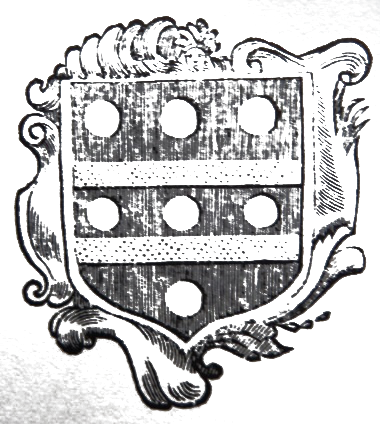
Continuation of the Pulligny line, an important bridge between the early civic family and the later noble branches.
- 5Claude Leclerc de Pullignyc. 1485, 1562
Valet de Chambre to Duke Antoine of Lorraine
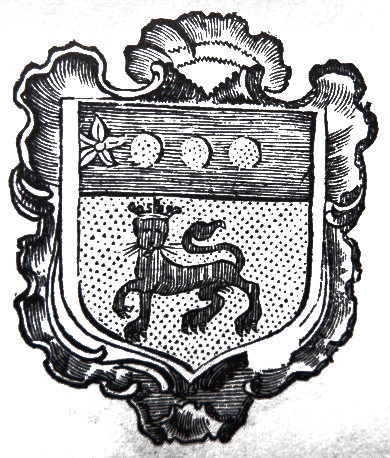
A major patriarch of the House of Le Clerc. Merchant of silk and wool cloth, valet de chambre to Duke Antoine, Conseiller and Auditeur at the Chamber of Accounts under Charles III, and seigneur of multiple lordships in Lorraine.
- 6Claude II Leclerc de Pulligny1532, 1598
Argentier of the Duke of Lorraine
Argentier to the Duke of Lorraine and Treasurer to the Count of Vaudémont's company, the height of the Le Clerc de Pulligny family's political and financial influence, whose conversion to Protestantism brought the confiscation of the family's nobility and lands, and one of the defining crises in the history of the House.
- 7Alexandre Le Clerc de Pulligny1585, after 1659
Knight of the Order of Saint Mark (Republic of Venice)
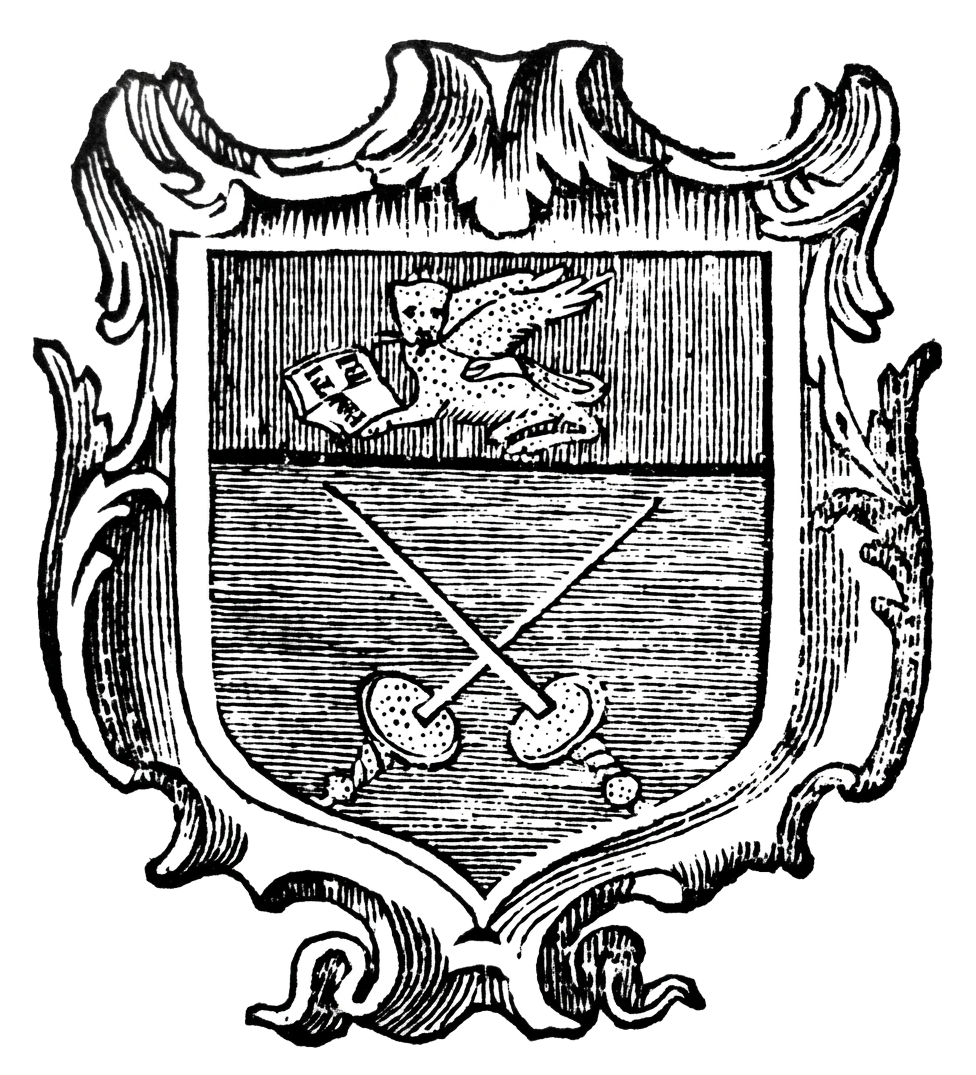
Born in Nancy, son of Claude II Le Clerc de Pulligny and Claudon Mengin de Pulligny. Served Charlotte Catherine de La Trémoille, Princess of Taranto and wife of Henri de Bourbon-Condé. Later a Knight of Saint Mark and, together with his brother Jean, restored to hereditary nobility on 28 May 1623. Alexandre represents the most likely continuation of the direct ancestral line following Claude II.
- 8Nicolas Le Clerc1624, 1660
Son of Alexandre Le Clerc de Pulligny and father of Alexandre II Le Clerc; the generation through which the direct ancestral line is carried across the mid-seventeenth century in Lorraine.
- 9Alexandre II Le Clerc1652, 1695
Minor Lord of Lorraine
Minor Lord of Lorraine and key transitional figure linking the historic Le Clerc de Pulligny family to the subsequent Le Claire branches from which the modern House descends.
- 10François 'Pierre' Le Claire1684, ?
First generation to bear the Le Claire form of the family name. Son of Alexandre II Le Clerc and direct ancestor of the eighteenth-century Le Claire line.
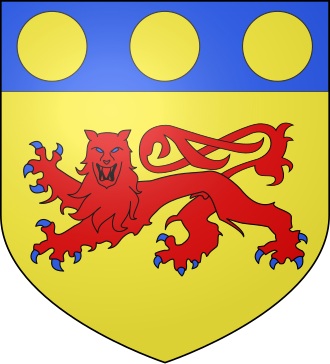
- 11
A principal figure in the documented LeClaire line. Father of the senior French officer Théodore François Joseph Leclaire and husband of an heiress of the Van der Vyvere.
- 12'Louis Benjamin' Jean Baptiste Alexis Leclaire24 June 1754, 29 July 1825
Younger son of Jean Pierre Le Claire and Jacqueline Van der Vyvere; younger brother of Général Théodore François Joseph Leclaire. Through Louis the direct bloodline of the modern House descends into the Rhineland.
- 13Johann Baptiste Le Clair1796, ?
A generation showing the family name in the Le Clair form, reflecting linguistic and administrative variation.
- 14Gottfried Leclair1842, 1915
A nineteenth-century representative of the Leclair spelling within the family's period of German-speaking assimilation.
- 15Julius Leclair1880, 1961
Son of Gottfried Leclair and Maria E. Maßmann; husband of Elisabeth Fitze and father of Bernhardine Licklär, through whom the bloodline continues into the modern German-speaking generation.
- 16Bernhardine Licklär1920, 1978
Daughter of Julius Leclair and Elisabeth Fitze; her surname records the fully Germanised form of the family name. Mother of Monika Ute Licklär by Jan Jagt; the two were not married.
- 17Monika Ute Licklär1944, ?
Continuation of the Germanised branch of the LeClaire line; mother of the modern restoration.
- 18Andrea Michaela Tai-Noble1966, ?
A daughter of the House of LeClaire; the continuation of the bloodline through the Licklär branch, and mother of Brandon Noble LeClaire. Her documented descent runs from Jean Pierre Le Claire and Jacqueline Van der Vyvere through their younger son Louis Jean Baptiste Leclaire, brother of Général Théodore François Joseph Leclaire, and the successive Le Clair, Leclair and Licklär generations of the Rhineland.
- 19Brandon Noble LeClaire1995, ?
Head of the House of LeClaire
Modern representative and present head of the House of LeClaire, one of the historic noble and moneyed houses of the Duchy of Lorraine, and, by his 22 May 2027 marriage to Abigail Jane Greenland, founder of the House of Greenland-LeClaire. He has formally restored the ancestral surname LeClaire to continue an eight-hundred-year documented lineage that includes the Sieurs de Pulligny, Auditors of the Chamber of Accounts of Nancy, advancers of capital to the Dukes of Lorraine, and his fifth-great-granduncle Général de Division Théodore François Joseph Leclaire, Commander of the Legion of Honour.
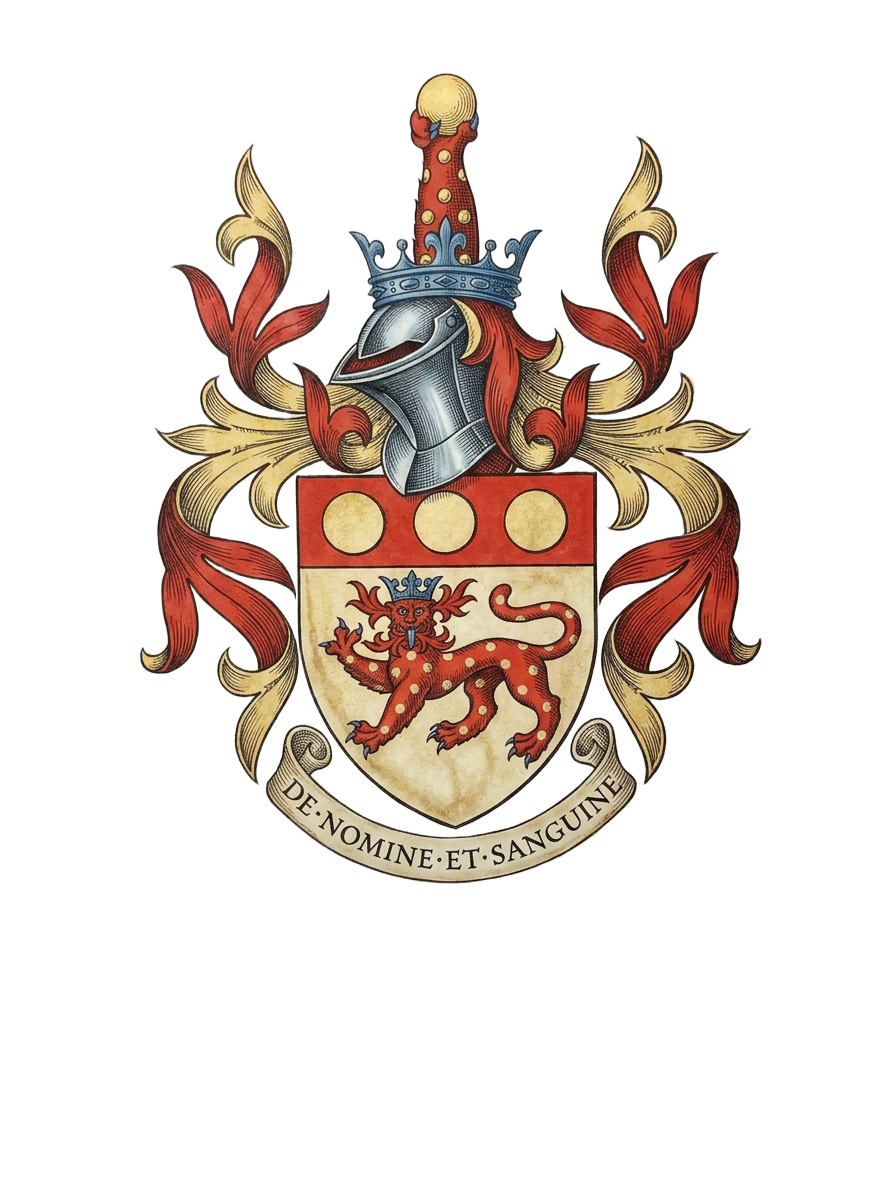
Related entities
Other documented people, family branches, places and armorial records connected to this entry in the archive.
Related people
Related families
Related places
Elsewhere in the archive
Citations & sources
Each numbered reference below supports a specific statement on this page. The evidence label records how firmly that reference attests the point.
- 1.Documented record, 1355 act of sale to Jean de Nomeny concerning inherited portions of the Girecourt estate at Folz beneath the castle of Faucompierre.↩Primary SourceFull reference: Documented record, 1355 act of sale to Jean de Nomeny concerning inherited portions of the Girecourt estate at Folz beneath the castle of Faucompierre.
- 2.Charter recording the sale of inherited portions at Folz beneath the castle of Faucompierre by Moingins dis li clers↩
Duchy of Lorraine, seigneurial act · 1355
Earliest surviving act naming the ancestor of the House.
Primary SourceFull reference: Charter recording the sale of inherited portions at Folz beneath the castle of Faucompierre by Moingins dis li clers, Duchy of Lorraine, seigneurial act, 1355 - 3.Genealogical source tradition, registers of medieval Lorraine and notarial records of the Pulligny and Gircourt families.↩Primary SourceFull reference: Genealogical source tradition, registers of medieval Lorraine and notarial records of the Pulligny and Gircourt families.
House of LeClaire
Published GenealogyFull reference: LeClaire Family Historical Archive, House of LeClaire — https://leclaire.co.uk/historical-archiveFrench National Archives, sovereign and noble records of the Ancien Régime and after.
Published Scholarly ResearchFull reference: Archives Nationales (France), French National Archives, sovereign and noble records of the Ancien Régime and after. — https://www.archives-nationales.culture.gouv.fr/Genealogy platform; use only entries that themselves cite primary records.
Published Scholarly ResearchFull reference: Geneanet, Genealogy platform; use only entries that themselves cite primary records. — https://www.geneanet.org/Open-licensed historical images, maps and document scans.
Published Scholarly ResearchFull reference: Wikimedia Commons, Open-licensed historical images, maps and document scans. — https://commons.wikimedia.org/Charles d'Hozier's Armorial général de France (1696), digitised by the BnF.
Published Scholarly ResearchFull reference: BnF, Armorial général de France (d'Hozier), Charles d'Hozier's Armorial général de France (1696), digitised by the BnF. — https://gallica.bnf.fr/ark:/12148/btv1b8470253qOpen-licensed reproductions of French armorial bearings.
Published Scholarly ResearchFull reference: Wikimedia Commons, Heraldry of France, Open-licensed reproductions of French armorial bearings. — https://commons.wikimedia.org/wiki/Category:Heraldry_of_FranceDigitised primary sources of the BnF, including charters and registers of Lorraine.
Published Scholarly ResearchFull reference: Gallica (Bibliothèque nationale de France), Digitised primary sources of the BnF, including charters and registers of Lorraine. — https://gallica.bnf.fr/Parish, notarial and seigneurial registers for Nancy and the former Duchy of Lorraine.
Published Scholarly ResearchFull reference: Archives départementales de Meurthe-et-Moselle, Parish, notarial and seigneurial registers for Nancy and the former Duchy of Lorraine. — https://archives.meurthe-et-moselle.fr/Parish and notarial records covering the Pulligny / Xirocourt area.
Published Scholarly ResearchFull reference: Archives départementales des Vosges, Parish and notarial records covering the Pulligny / Xirocourt area. — https://archives.vosges.fr/Bibliographic catalogue of printed and manuscript holdings.
Published Scholarly ResearchFull reference: Bibliothèque nationale de France, Catalogue général, Bibliographic catalogue of printed and manuscript holdings. — https://catalogue.bnf.fr/
Canonical URL: https://leclaire.co.uk/people/mengin-le-clerc